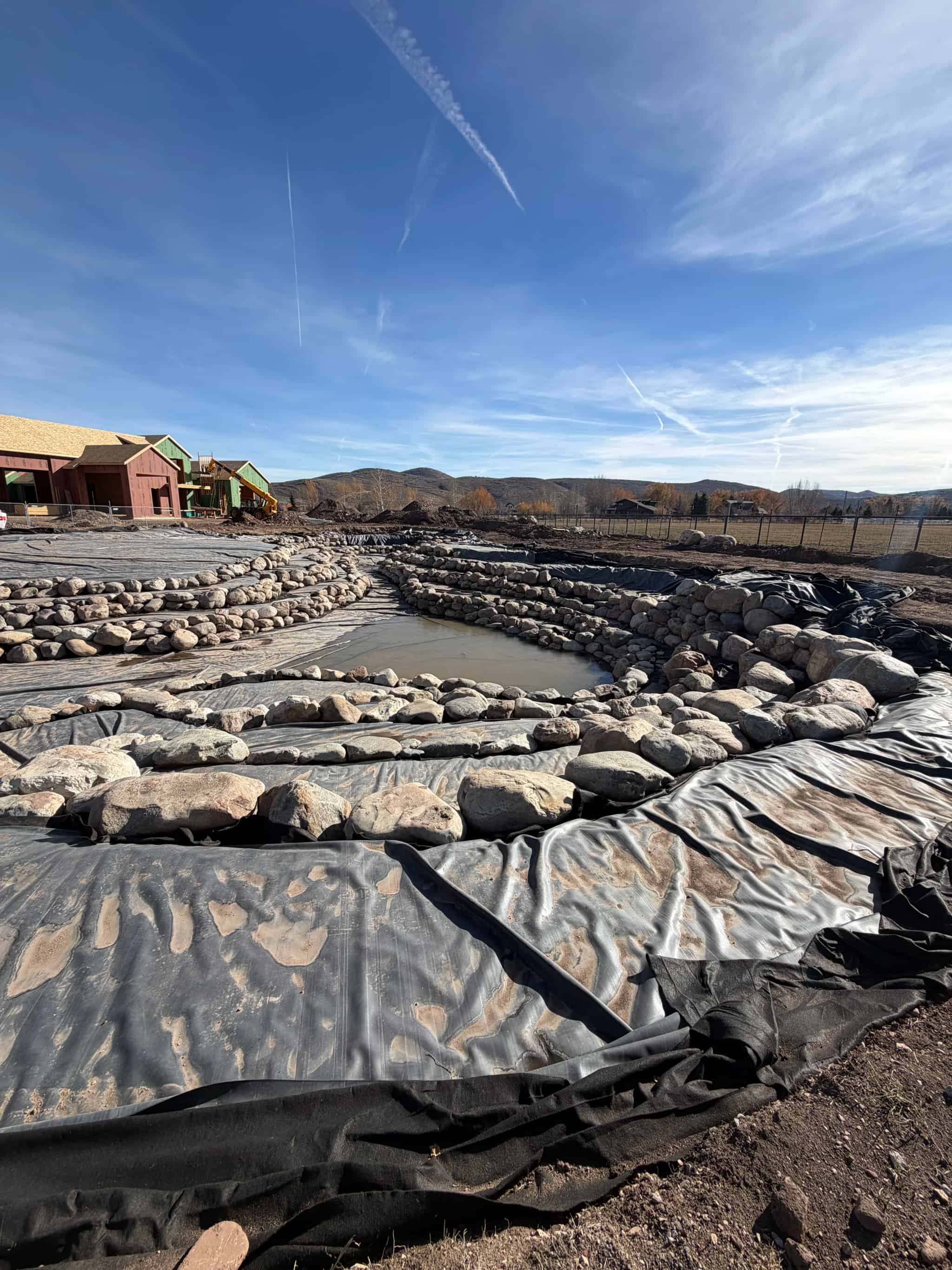
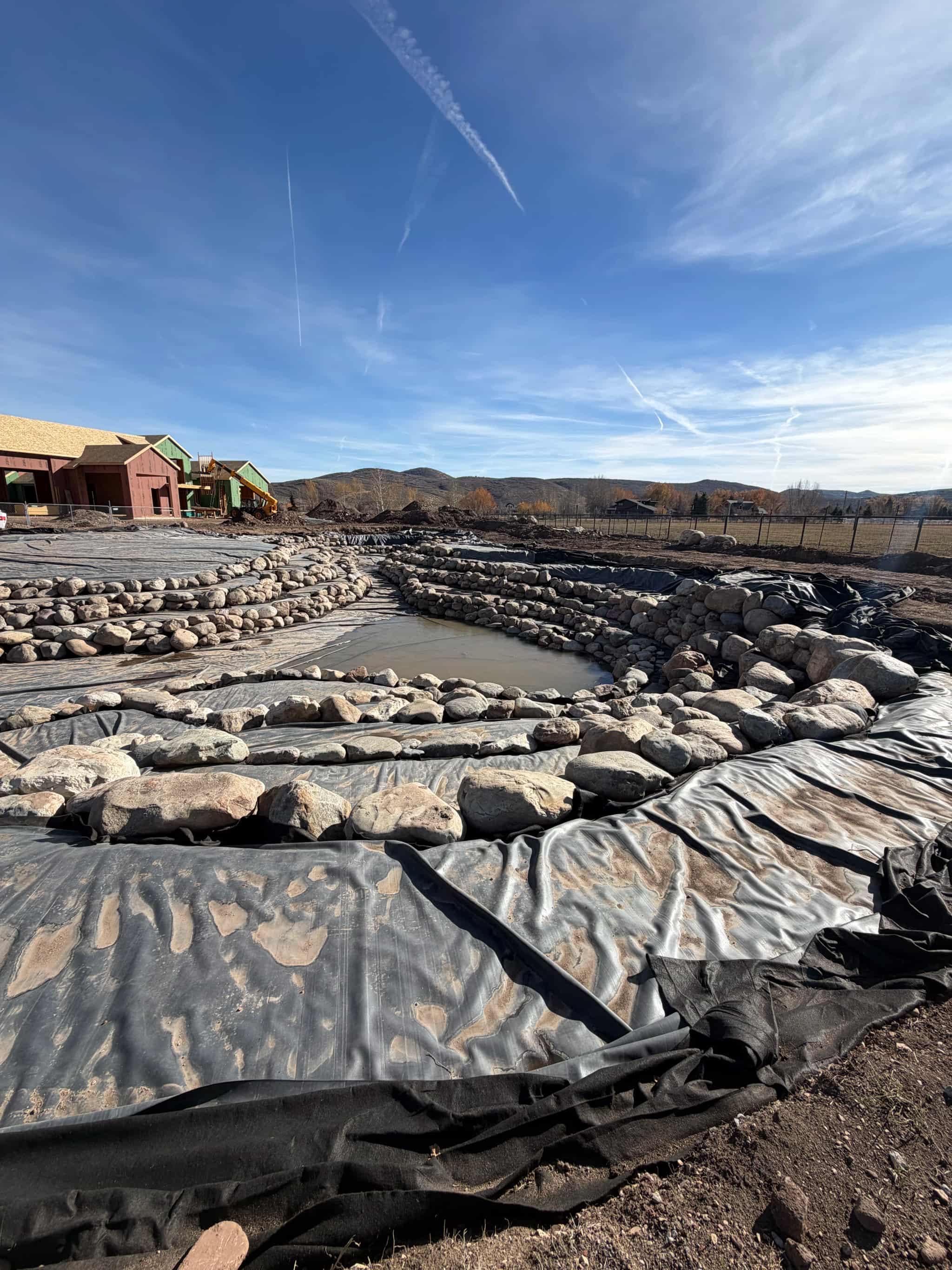
Premium EPDM options built for Utah sun, freeze/thaw, and year-round flexibility.
Trusted Since 2009
Pond Liners in Utah
EPDM liners, geotextile underlayment, seam work, and leak testing — built for Utah’s sun and freeze/thaw cycles. Sizing help, installation, and repairs.
Trusted Since 2009
Pond Liners in Utah
EPDM liners, geotextile underlayment, seam work, and leak testing — built for Utah’s sun and freeze/thaw cycles. Sizing help, installation, and repairs.
Pond Liners in Utah
EPDM liners, geotextile underlayment, seam work, and leak testing — built for Utah’s sun and freeze/thaw cycles. Sizing help, installation, and repairs.
Non-woven protection layer that reduces punctures from rock, roots, and settling.
Proper folds, penetrations, seam work, and test fills to confirm watertight results.
Sizing help, delivery logistics, and install/repair service across the Wasatch Front.
Why “Pond Liners” Matter (and Where Most Ponds Go Wrong)
It’s not just the liner — it’s the system
A durable pond liner is the foundation, but long-term performance comes from the details: underlayment, folds, penetrations, seams, edge treatment, and a proper leak test before rockwork is finalized. We help DIY builders and provide full-service installs and repairs across Utah.
Need materials? Start with pond materials, or browse pond supplies.
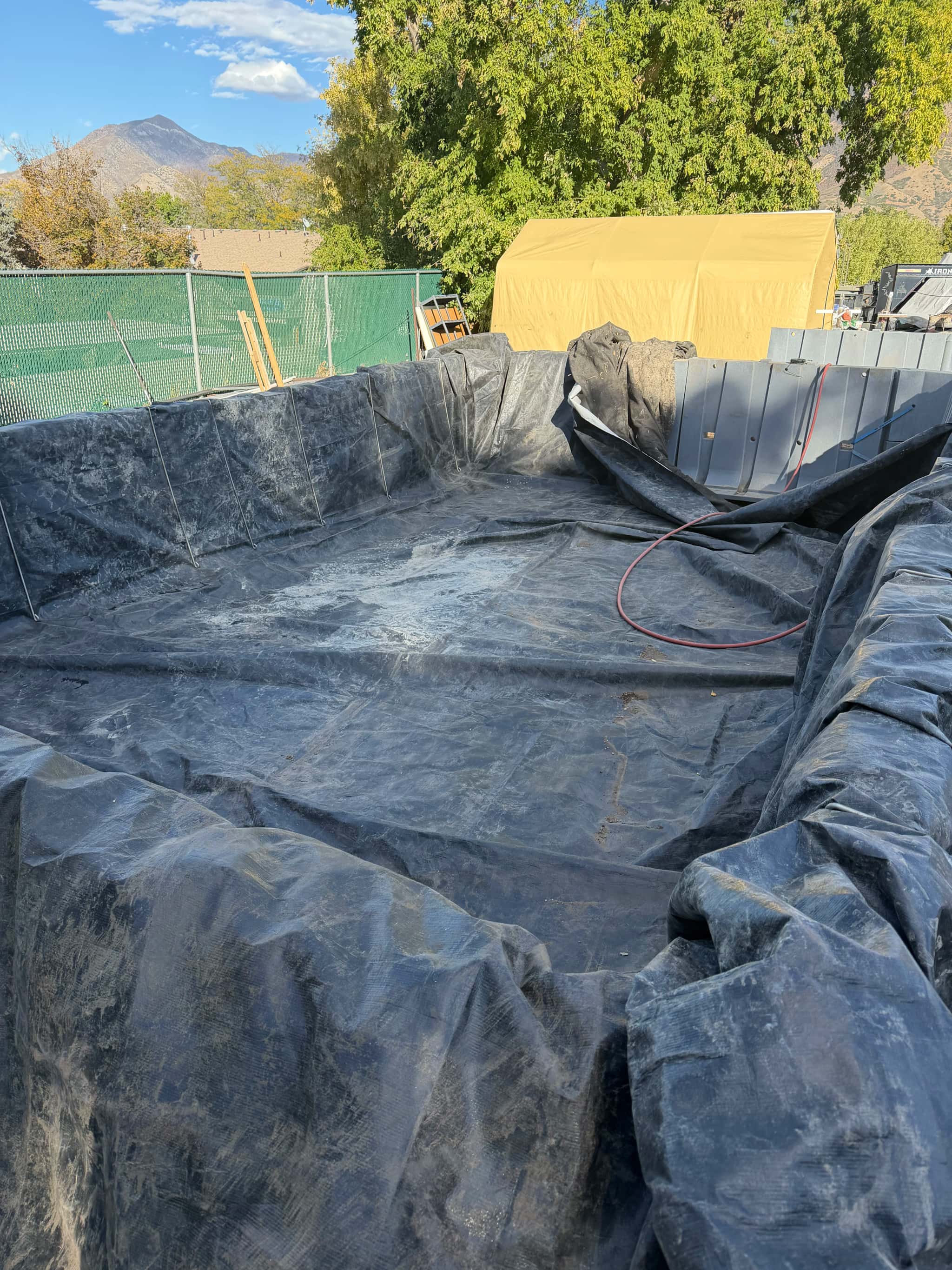
The right liner for your pond type
EPDM rubber liners are the go-to for koi ponds and naturalistic water features. We also support PVC and specialty applications where welded seams or formal shapes are preferred.
Underlayment is not optional
Most “liner failures” are puncture failures. A quality geotextile underlayment protects the liner from rocks, roots, and ground movement—especially on shelves and edges.
Edges & penetrations done correctly
Skimmers, returns, bottom drains, and edge treatment are common leak points. We handle critical details so your liner system stays watertight for years.
Pond Liner Sizing (Simple Formula + Real-World Notes)
Sizing formula
Liner length = pond length + (2 × max depth) + 2 ft overlap
Liner width = pond width + (2 × max depth) + 2 ft overlap
- Overlap helps anchor edges and protects against settling
- Shelves, folds, and streams may require additional material
- Penetrations (skimmers/returns) should be planned before trimming
EPDM liner options
EPDM rubber liners are fish-safe, UV-resistant, and remain flexible through Utah winters. We commonly use 45-mil and 60-mil depending on site conditions and risk factors.
- Great for irregular shapes and naturalistic ponds
- Excellent durability under freeze/thaw cycles
- Pairs best with high-quality geotextile underlayment
Underlayment (geotextile)
Underlayment is your puncture insurance. It protects from rock points, roots, and differential settling — especially on shelves, edges, and hard transitions.
- Reduces punctures and abrasion
- Helps protect folds from stress points
- Improves liner longevity in harsh outdoor conditions
Installation Overview (What We Do Differently)
Sizing & takeoff
We calculate liner size using pond length, width, and maximum depth—plus overlap for anchoring. For complex shapes, we plan folds and seam locations up-front.
Underlayment + liner placement
Underlayment goes in first, then the liner is positioned with correct slack for shelves and transitions. This prevents tension tears and keeps folds controlled.
Seams, penetrations, and leak testing
We address seam work, skimmer/return penetrations, and edge detail. Then we test fill and verify water levels before final rockwork closes everything in.
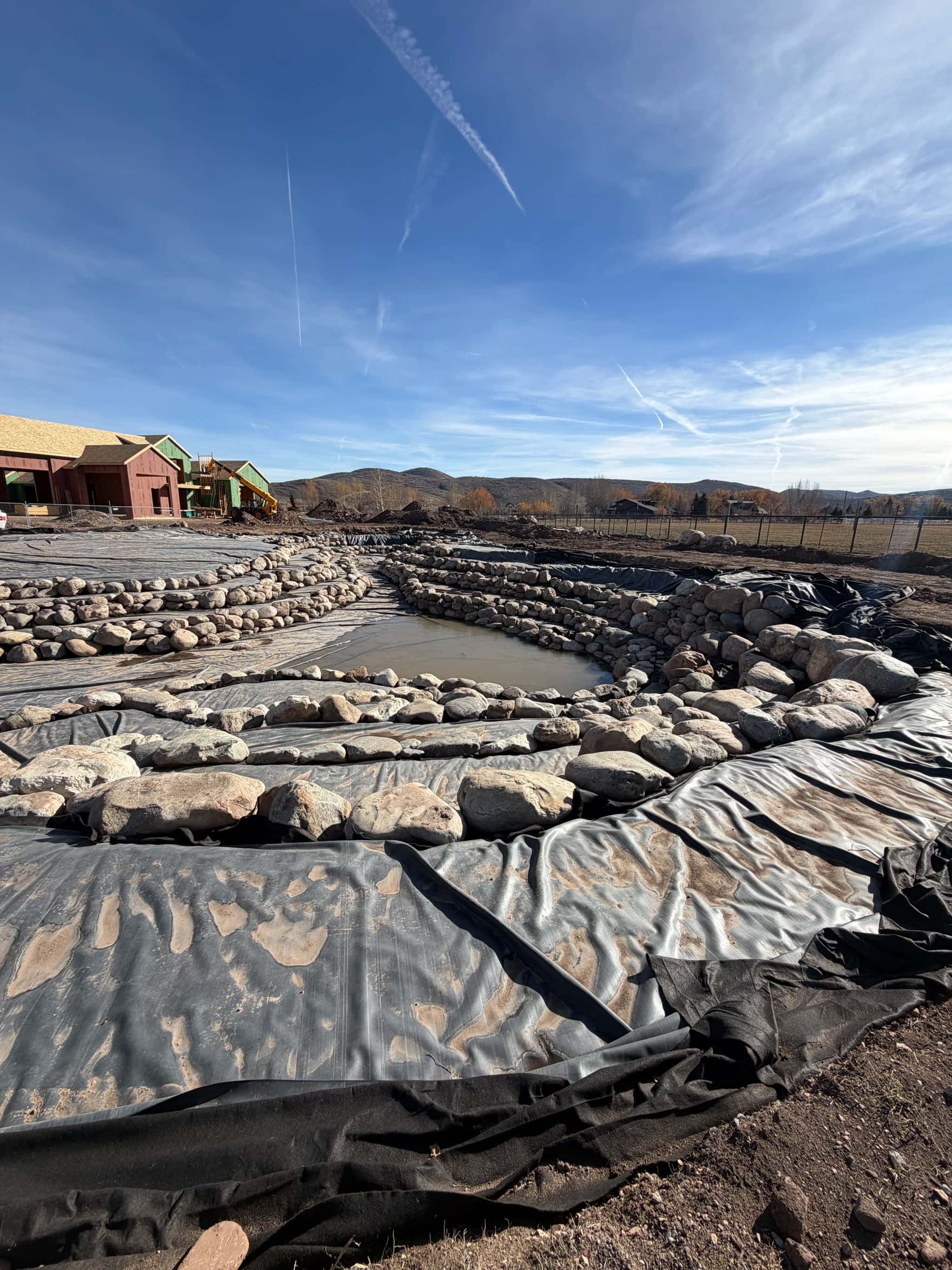
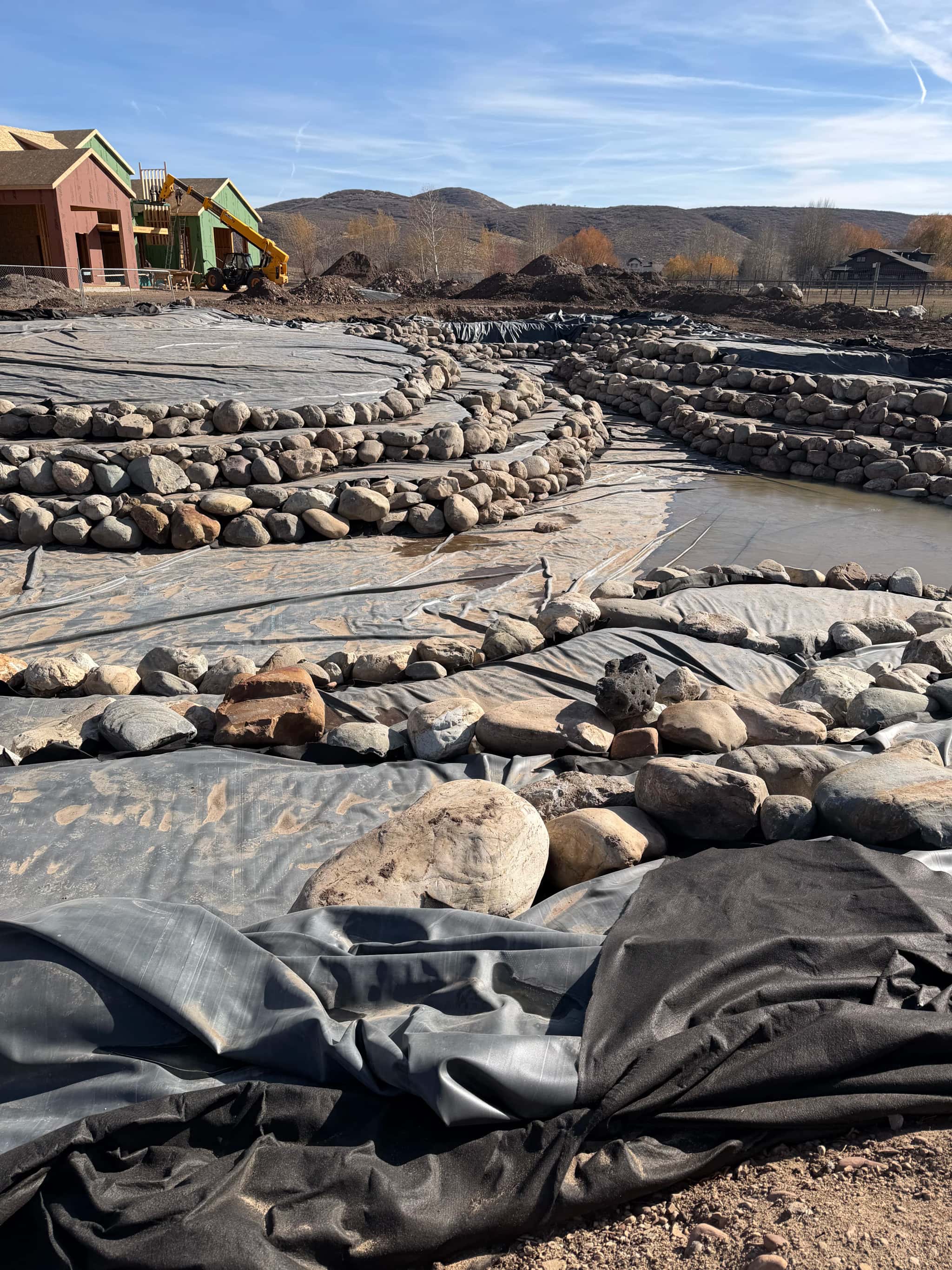
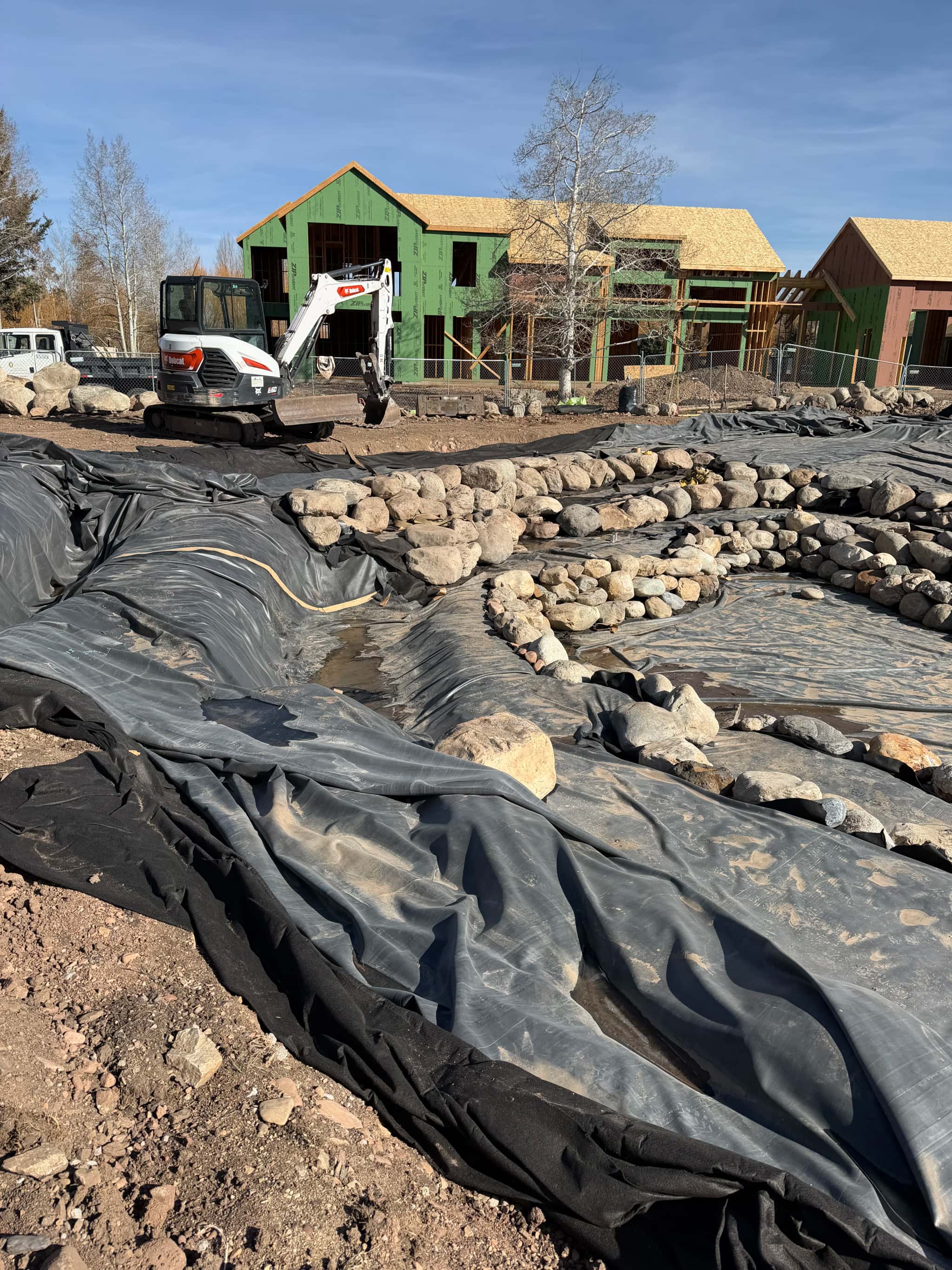
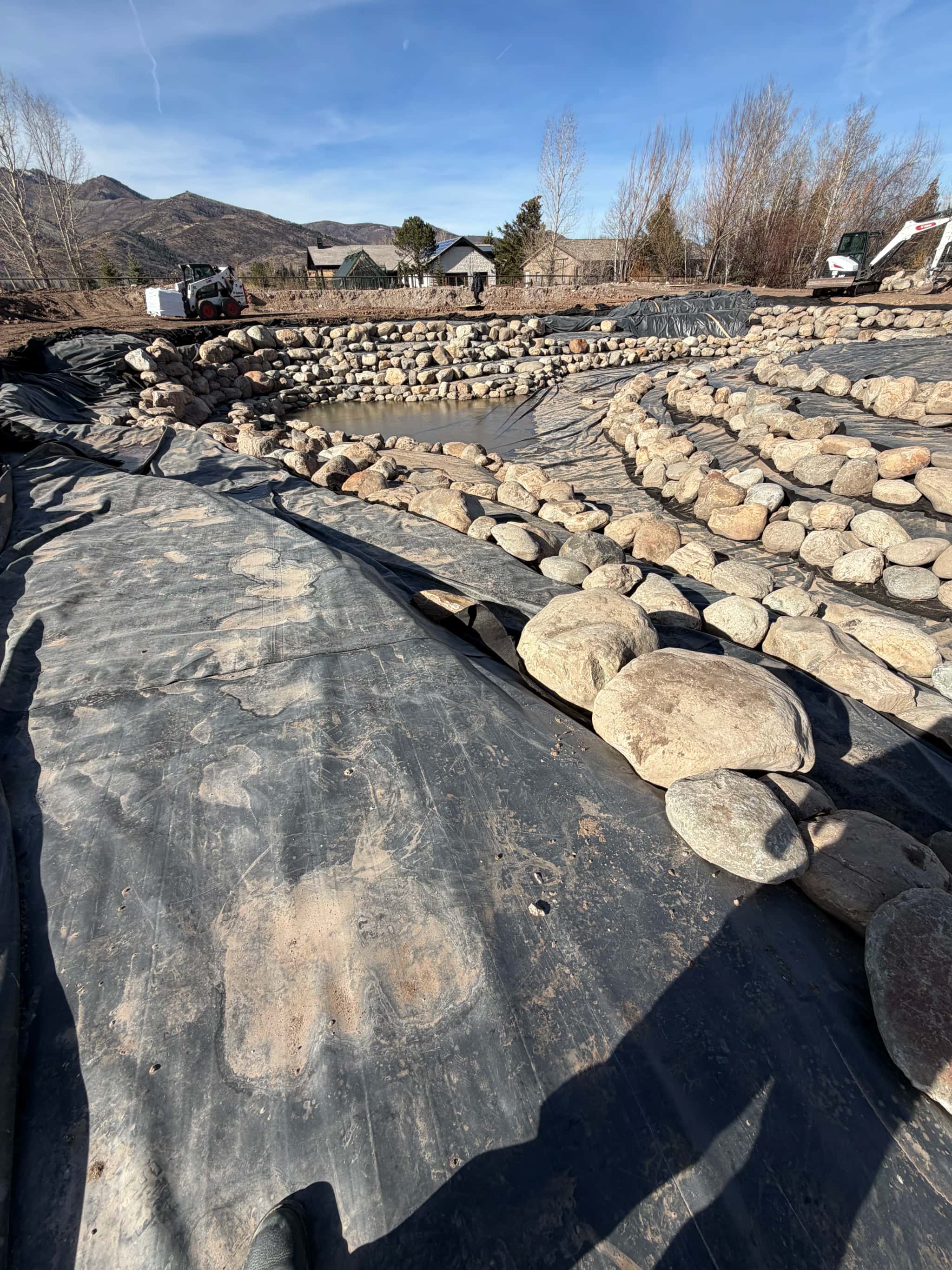
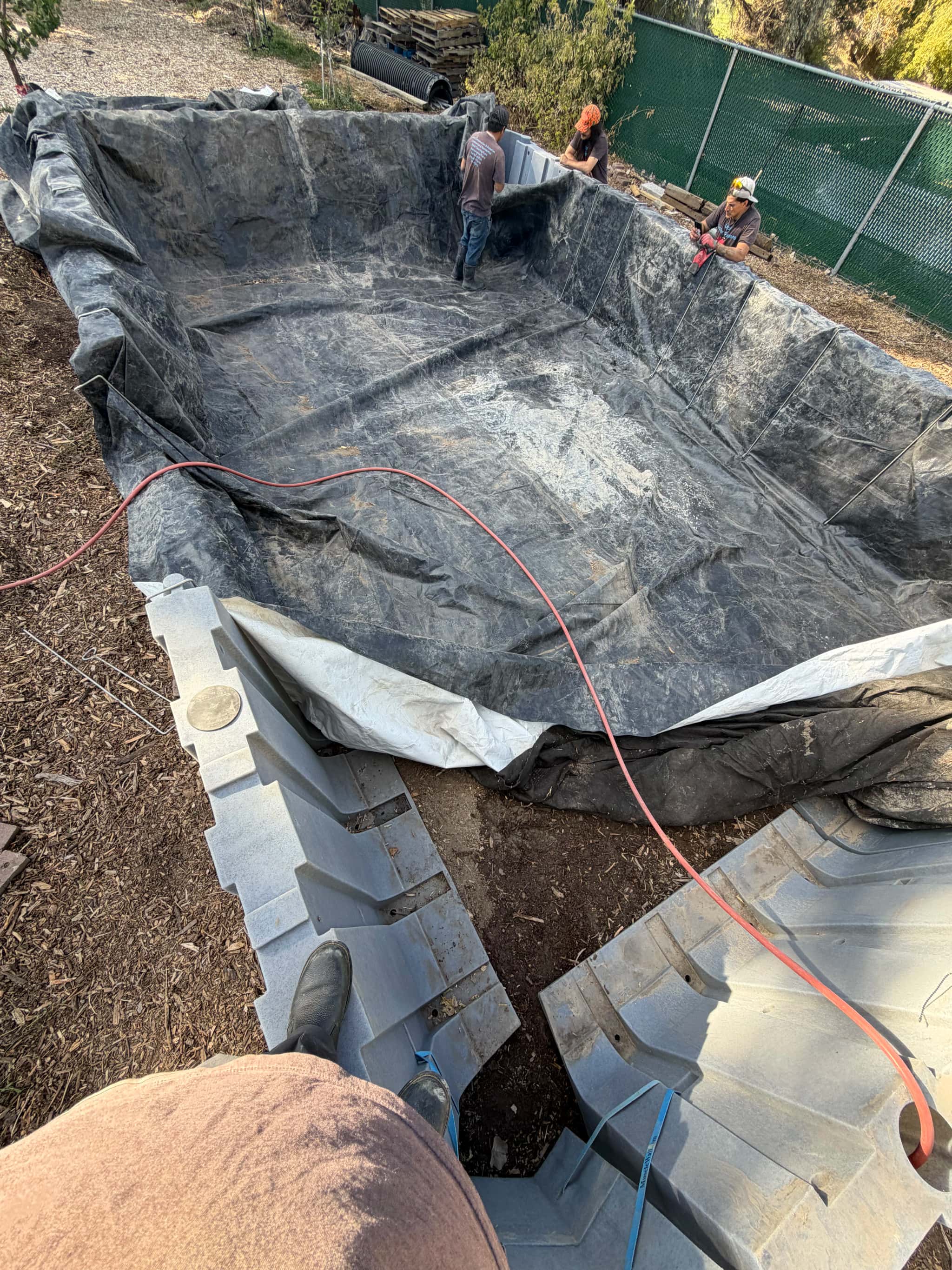
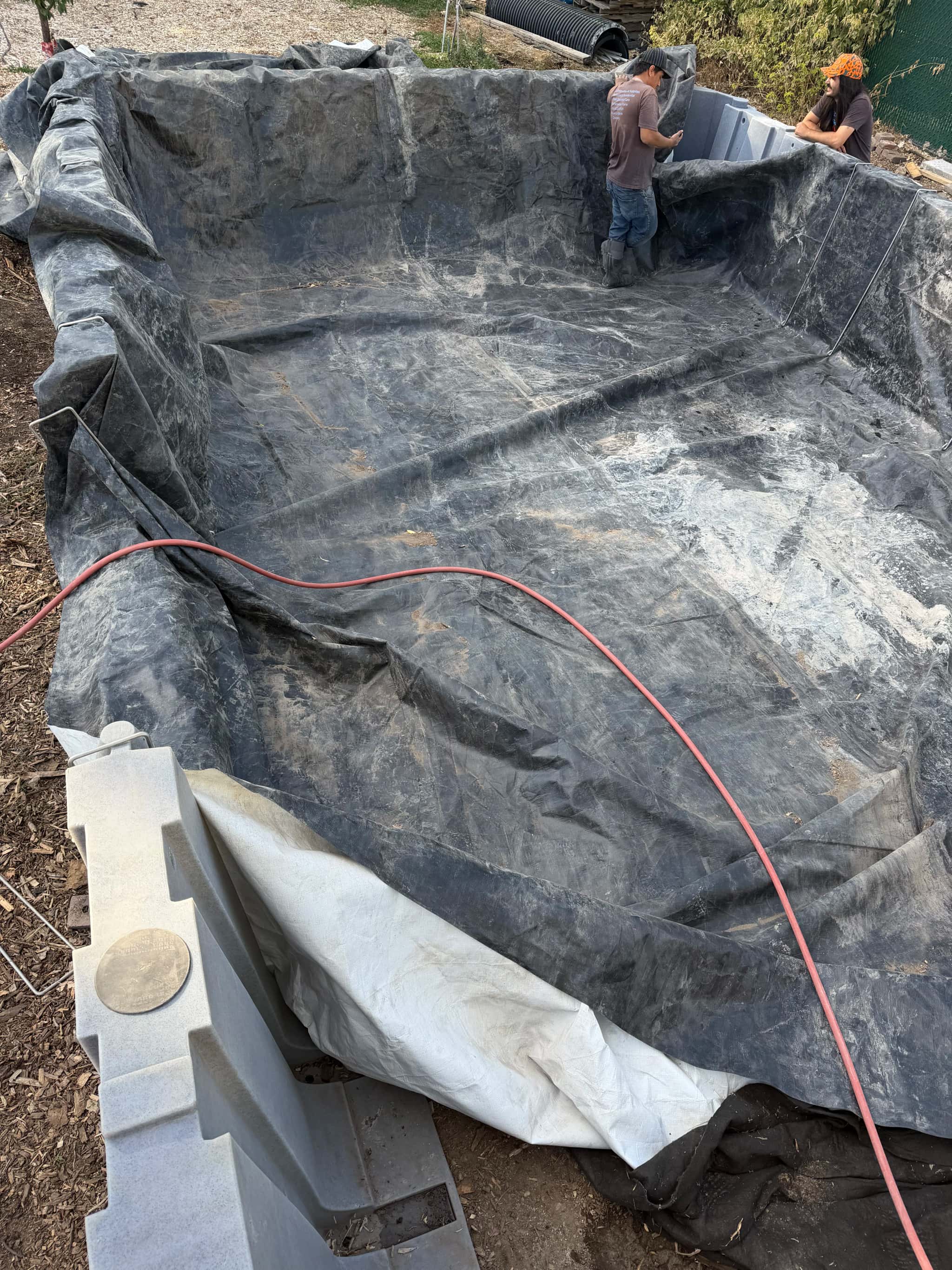
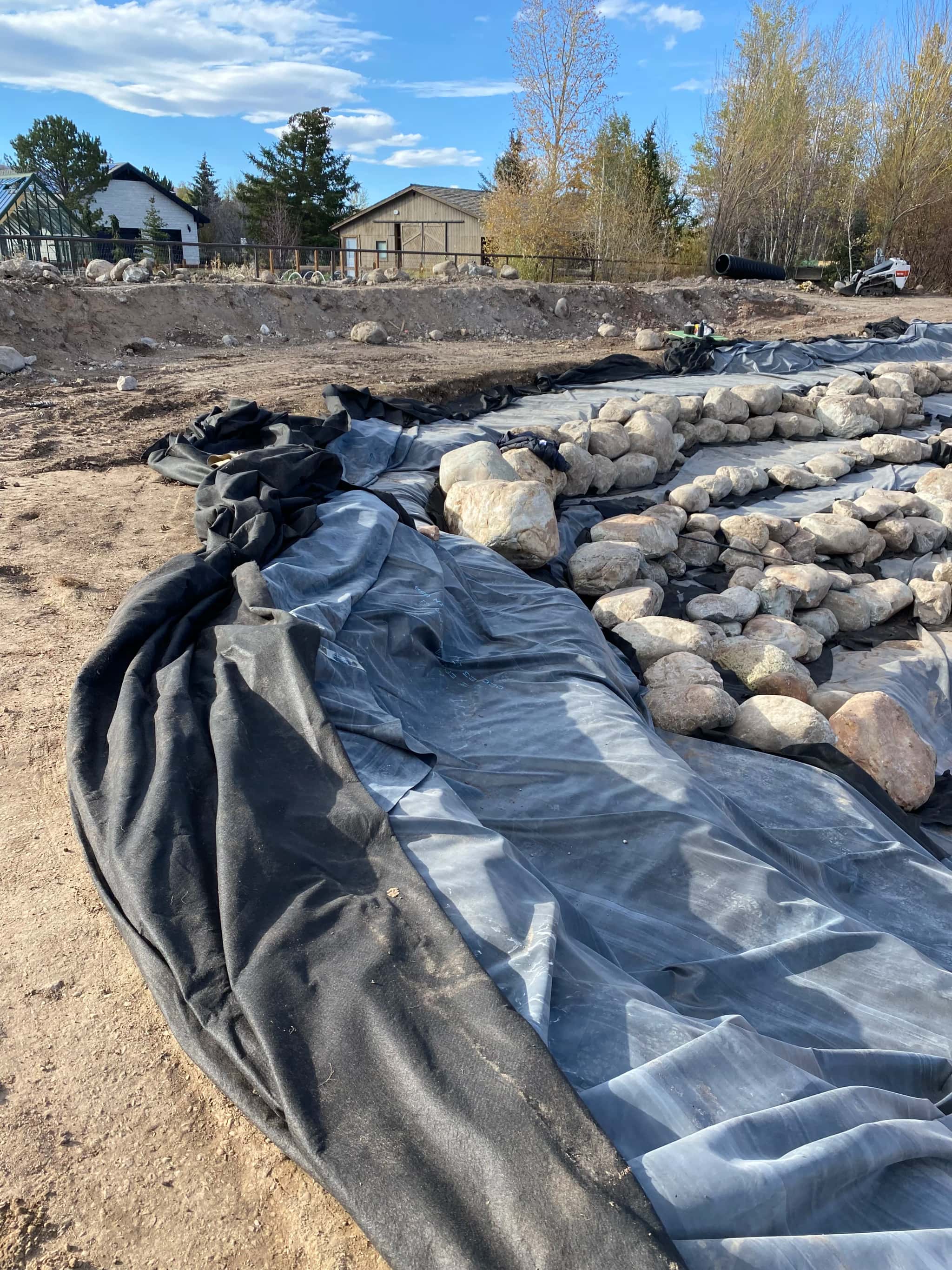
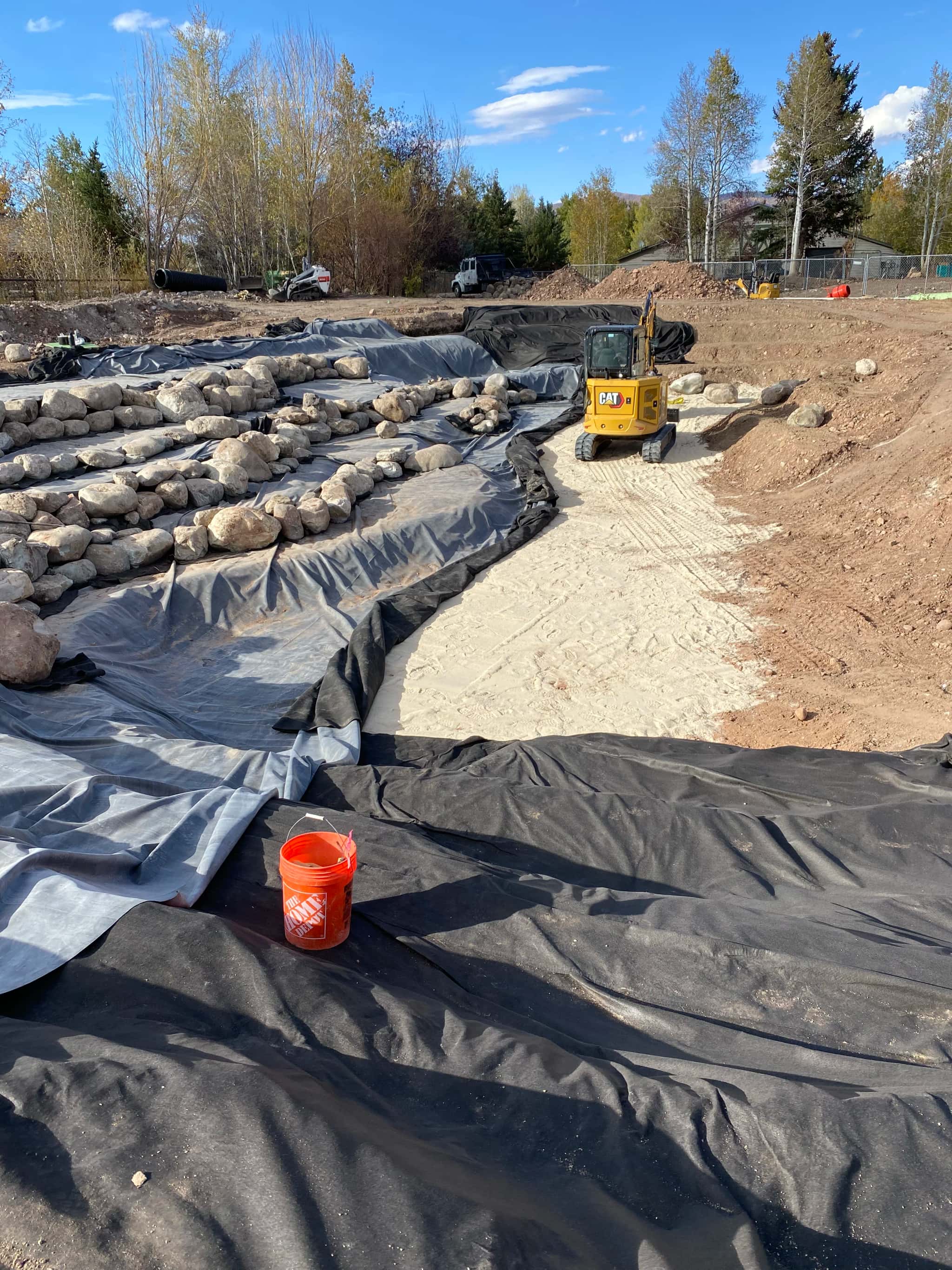
Pond Liner Installation Photos
Real installs from our Utah projects. These show underlayment, liner placement, fold management, and staging before rockwork and final edge finishing.
Common Liner Problems We Fix
Punctures & abrasion
Root/rock punctures, shelf abrasion, and edge wear — often from missing or inadequate underlayment.
Penetration leaks
Skimmer mouths, returns, and bottom drain seals that were not prepped or sealed correctly.
Splash-out & overflow
Water escaping the liner due to rock placement, waterfall throw, or grade issues that mimic “leaks.”
Pond Liner FAQs
By Utah Water Gardens•Last updated:
Last updated: 2025-12-12 • Looking for quick answers? See Pond & Water Feature FAQs.