Pond Cleaning Starts With a Plan for Your Fish
The holding tank, the weather, and the time needed to refill matter as much as the cleaning itself. We adapt the visit to the fish and the feature, from a small backyard pond to a large system with multiple basins.
Before we drain
Choose suitable containment and plan for the sun, job length, and fish size.
During the work
Monitor fish, manage holding conditions, and adjust if the job changes.
Before we hand off
Review refill progress, fish care, equipment, and what the owner should watch.
Does Every Pond Need a Full Drain?
No. Targeted debris removal, vacuuming, and routine maintenance may be enough. We generally recommend planning full cleanouts in spring and fall, with maintenance through summer, but the right scope depends on accumulated sediment, equipment, fish, and the pond's condition.
Visible sludge, recurring debris, odors, or declining filter performance warrant a closer look. Green water alone does not tell the whole story: see our pond algae guide and comparison of vacuuming and dredging.
A Holding Tank That Fits the Job
For small fish and a short visit, a suitable tote may be practical. Larger koi may need a trough, and bigger projects may require larger temporary containment tanks. We consider fish size, weather, and how long the fish will be out of their pond.
We use pond water for temporary holding and plan aeration and monitoring around the conditions. A short cleaning is not a reason to leave fish unattended.
Plan for where the sun will move
A shaded spot in the morning can be in full sun by afternoon. On longer projects, we may bring shade to cover the holding area.
How We Catch and Monitor Koi
We lower the pond water to a manageable level before netting fish, using nets suited to larger koi where needed. In a multi-basin system, another suitable basin may sometimes serve as temporary holding.
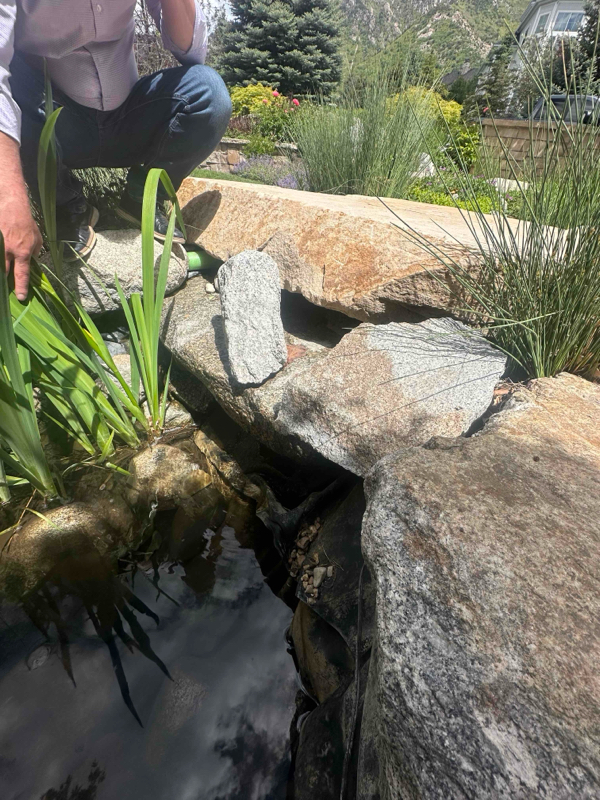
Surface gulping, struggling fish, extreme heat, or equipment trouble can change the plan. Discovering a liner hole can also extend the work. We reassess the holding arrangement and the scope of cleaning when conditions change.
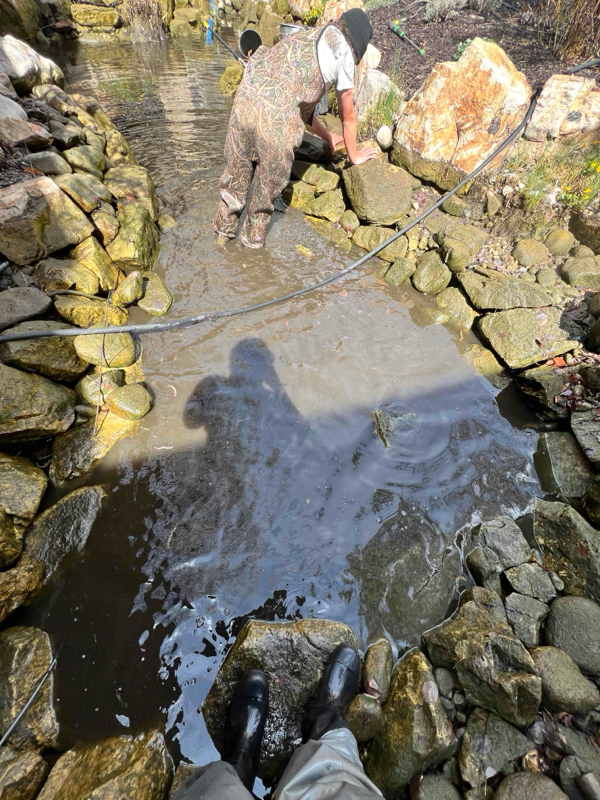
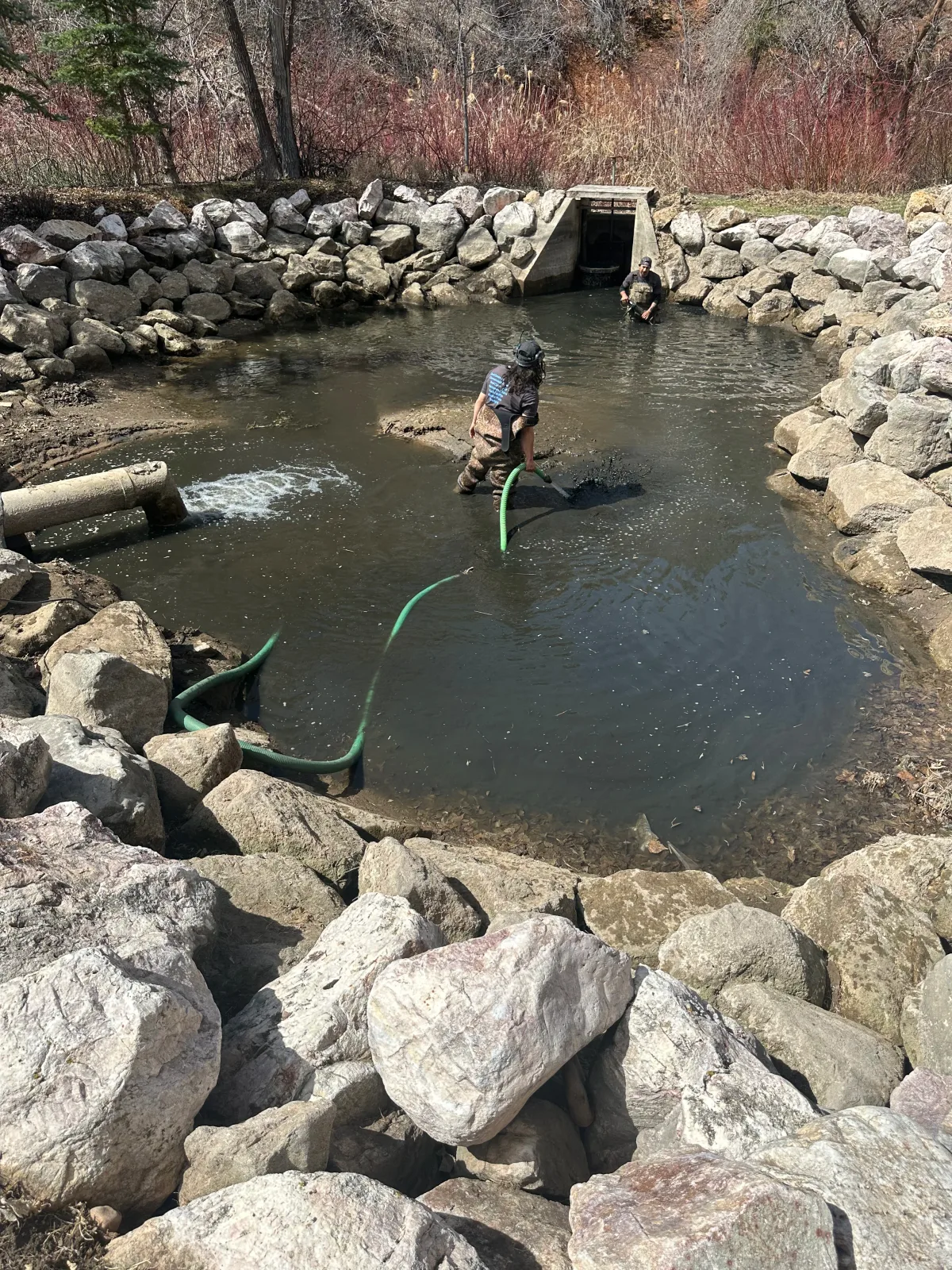
A yearly Park City cleanout, photographed by our team.
Clean From the Top Down
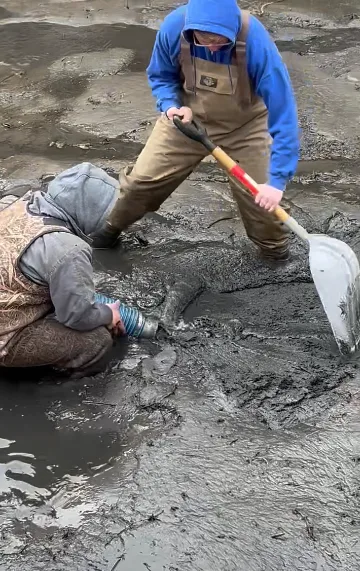
We typically work from the upper stream or waterfall toward the lower basin, flushing loosened silt to a low point where it can be removed. Depending on the job, that means pumping out sludge, removing muck by hand, and pressure washing accessible rock surfaces.
We do not flip every rock or aim to sterilize the pond. Some surfaces remain undisturbed, but that is not a guarantee that the pond's biological filtration will be unaffected.
Handle biological filters separately
We generally shake accumulated debris out of the filter media rather than aggressively cleaning it. More intensive cleaning depends on a specific need. We also add beneficial bacteria back to the biological filters after the work.
Give the viewing area extra attention
We consider where you sit, look out from the house, or enjoy the waterfall. Those viewing areas help guide the detail work, alongside debris removal and equipment checks.
Refill Water and Returning Fish
We use dechlorinator when refilling. Use a conditioner appropriate for the water supply and follow its label, including whether it treats chloramine. Spraying or misting a hose is not a substitute: aeration can help remove free chlorine, but it does not remove chloramine.
Colder water is not automatically safe for transfer. Sudden temperature changes in either direction can stress fish. Compare holding and refill conditions and acclimate fish before returning them; temperature, pH, and dissolved oxygen all matter.
These precautions are consistent with UF/IFAS guidance on holding and transferring ornamental fish.
The Refill and Homeowner Handoff
A large pond may take longer to refill than the cleaning itself. We generally try to remain until fish can be returned and go over the remaining steps with the homeowner. Discuss this arrangement before the visit so everyone understands who is responsible for the refill and fish monitoring.
When we anticipate that fish cannot return before the crew leaves, we plan ahead and set up longer-term containment. Monitoring responsibilities and the return arrangements should be agreed on as part of that plan. An unexpected repair or equipment problem means revisiting the plan before handoff.
What to Watch After a Pond Cleaning
- Fish behavior: watch for surface gulping, unusual behavior, or continuing distress and contact us promptly about concerns.
- Equipment: confirm the pump, filters, and aerator are operating as intended.
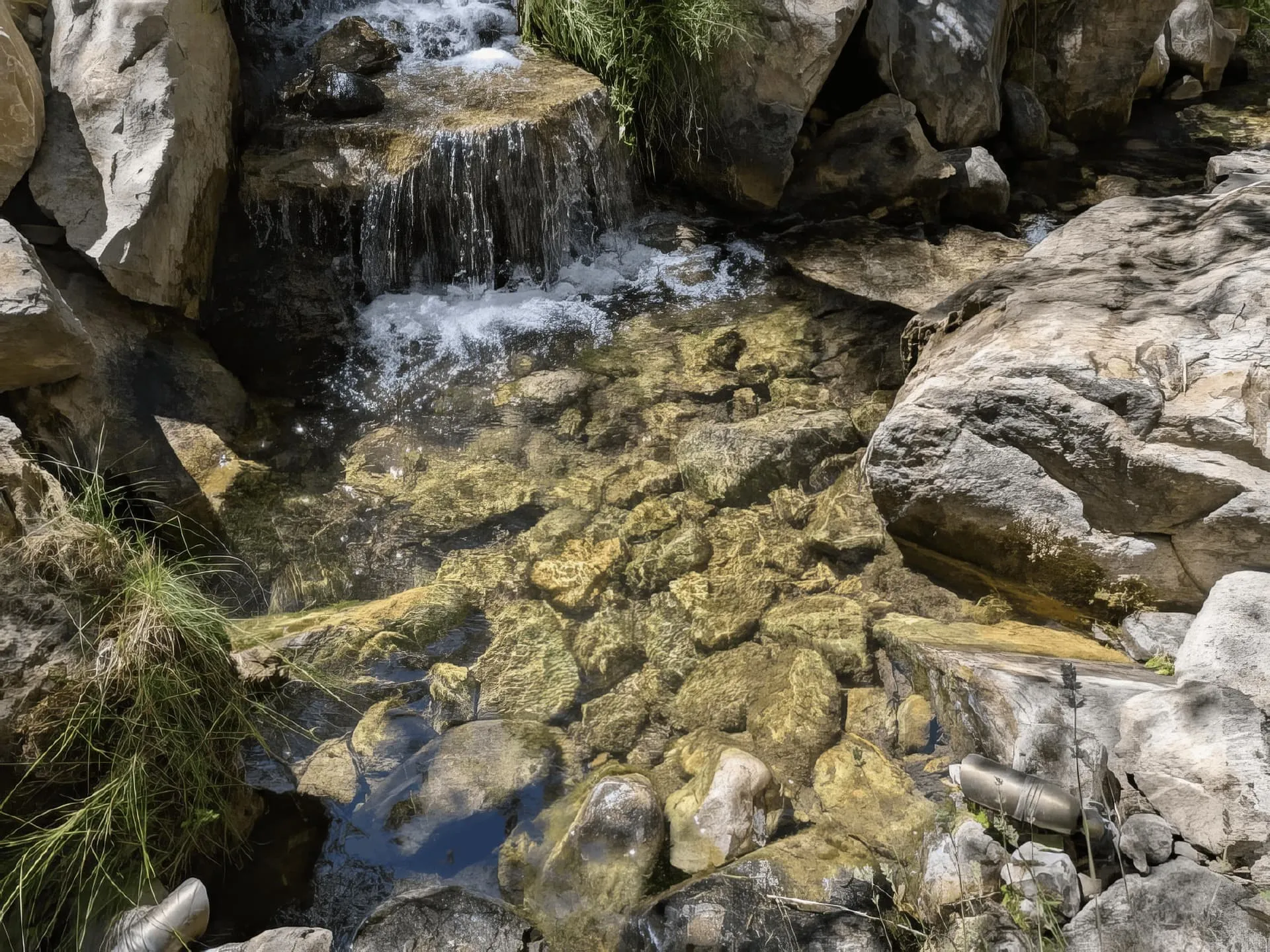
- Waterfall flow: small rocks can shift during cleaning and redirect water toward an edge.
- Water level: report unexpected losses. Our leak or evaporation guide explains useful observations.
Our crew sees the feature during a limited visit. Your observations over the following hours and days help identify changes we could not see while on site.
Talk to the People Who Clean Ponds and Care for Fish
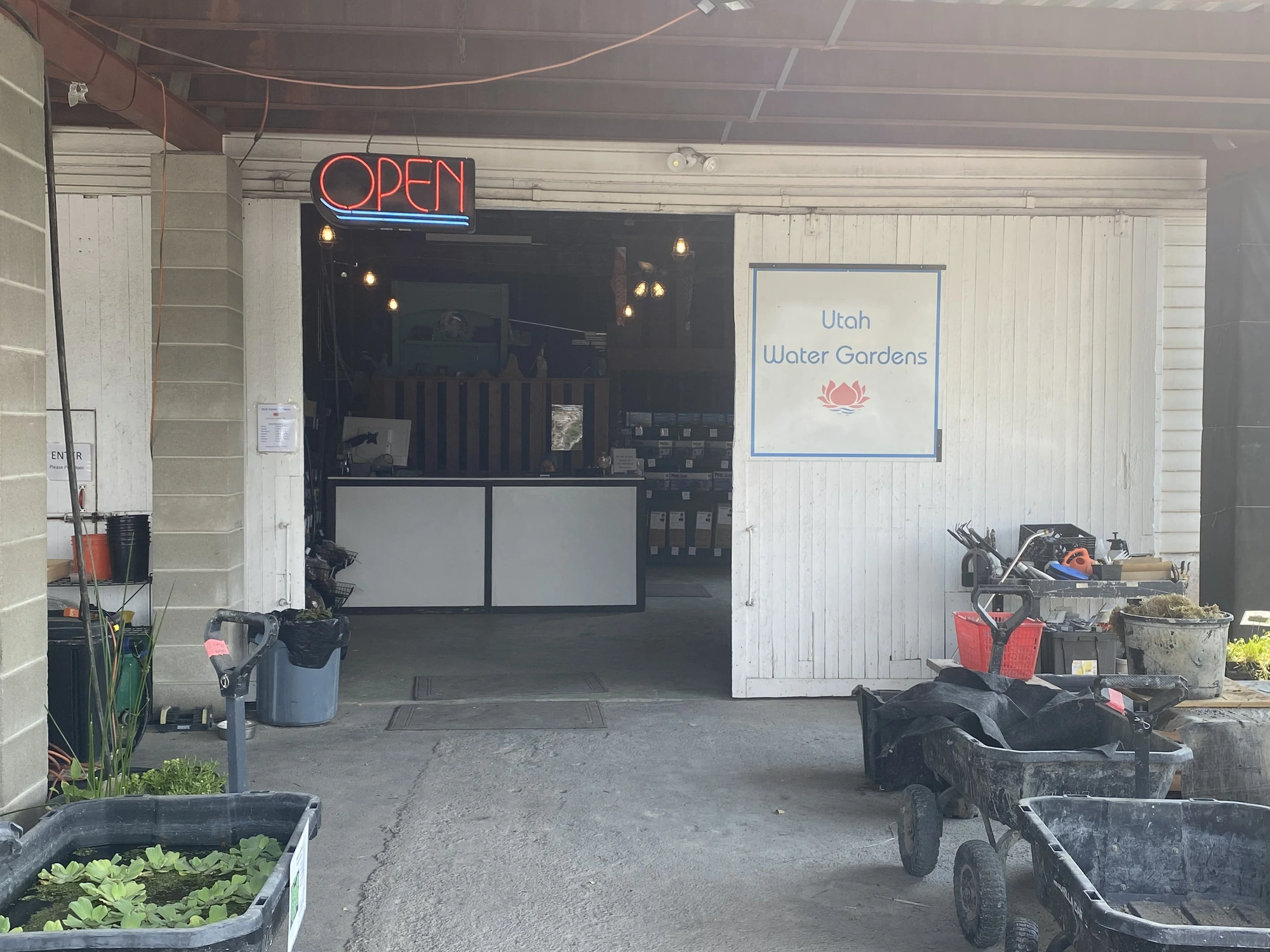
Utah Water Gardens cleans ponds of different sizes and complexities. We also sell koi, fish-care supplies, and aquatic plants at our nursery. You can walk in, show us pictures, see our ponds, and talk face-to-face about yours.
Bring overview photos, close-ups of concerns, approximate dimensions, fish details, and information about your equipment. We can discuss a cleanout, ongoing maintenance, or products appropriate to your situation.
Request a pond cleaning quote Explore our pond cleaning service
Call 801-590-8516 or plan a visit to our aquatic nursery. For seasonal planning, use our spring and fall cleaning checklist.