How to Remove Sludge Buildup and Improve Pond Water Health
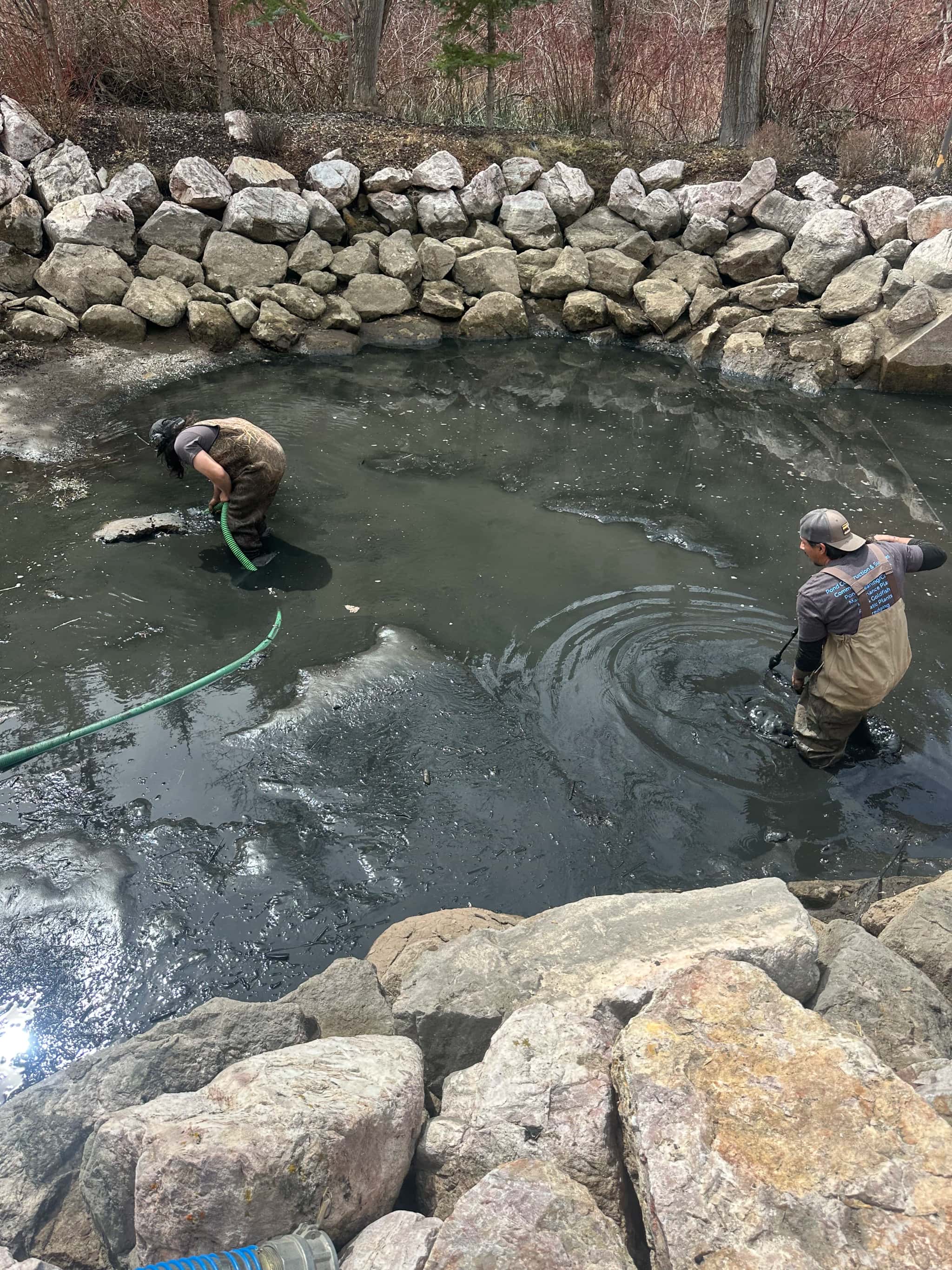
Sludge is sneaky. At first it’s just “a little stuff on the bottom.” Then your water gets cloudy more often, algae shows up faster, and the pond starts to smell off. Removing sludge is one of the fastest ways to improve pond water health — and it doesn’t always require draining.
Why sludge causes problems (even when the water looks okay)
Sludge breaks down into nutrients. Nutrients feed algae. And as sludge decomposes, it can also pull oxygen down in the lower water column. That’s why koi ponds with heavy muck can feel “fine” until suddenly they’re not.
Step 1: Remove the bulk (vacuum the low spots)
Start where sludge collects: corners, dead zones, and low points. Vacuuming pulls out the organic layer before it can keep feeding the system. See pond vacuum service for how we do this without draining.
Step 2: Fix the reason it’s collecting
If sludge keeps rebuilding fast, something is off: circulation, skimming, or filtration capacity. This is where pond pumps and pond filtration make the biggest difference long-term.
Step 3: Stabilize water chemistry
After sludge removal, stabilize with good testing and the right treatments. Utah hard water can be stubborn. Use pond treatments as a support tool — not a substitute for removal.
Conclusion
Sludge removal is the “boring fix” that makes ponds easier. If you want your pond to stay clear with less drama, remove the muck, then support circulation and filtration. And if you want it done fast, schedule service and we’ll handle the cleanup.