A Seasonal Pond Cleaning Plan That Actually Makes Sense
A spring reset. Steady summer upkeep. A fall cleanup before the leaves and cold take over. Use this checklist to plan your pond care, then talk with us about the work your particular feature needs.
Spring Pond Cleaning Checklist
Spring reveals what winter left behind: settled debris, shifted rockwork, and equipment or water-loss problems.
- Remove leftover leaves, dead vegetation, and settled sludge.
- Inspect pumps, filters, tubing, and skimmer boxes.
- Check liner edges and rocks for winter damage or movement.
- Review plugged lines and other winterization items before startup.
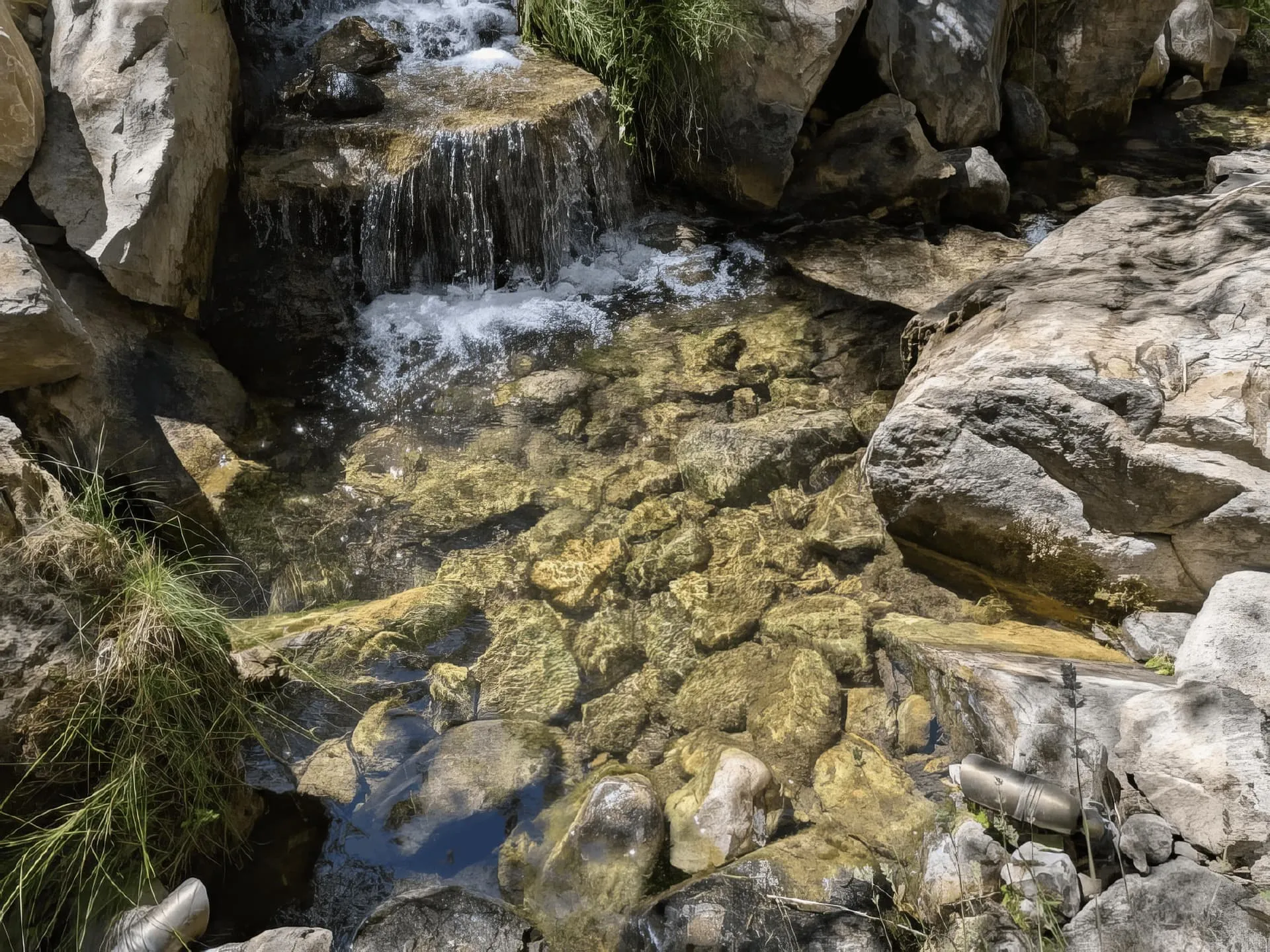
- Check waterfall flow and whether water remains inside the feature.
- Watch fish behavior as temperatures change; discuss water testing when there is a specific concern.
Summer Pond Care Priorities
Warm weather brings plant growth, algae questions, evaporation, and more demand on your equipment.
- Keep mechanical filters and skimmers from falling behind.
- Watch the water level and note changes in water loss.
- Look for splashing or plants redirecting water outside the stream.
- Remove debris before it sinks and accumulates.
- Watch for algae blooms and changes in fish behavior.
- Check pumps, circulation, and aeration are operating.
Fall Pond Cleaning Checklist
Clear the material that would otherwise sit in your pond through winter. September through November is a common window, narrowing as the weather gets colder.
- Remove leaves, sludge, and accumulated organic debris.
- Cut back vegetation that will die and fall into the pond.
- Clean filters and inspect pumps and aeration equipment.
- Discuss leaf netting before the majority of leaves fall.
- Decide what will keep running and what needs winterizing.
- Discuss any separate plumbing work, caps, plugs, or supplies.
Winter Prep Basics and Ongoing Checks
Every feature behaves differently in freezing conditions. Pay particular attention after very cold nights, snow, rain, or wind.
- Watch for ice redirecting water outside the pond or waterfall.
- Check that flowing water stays contained within its channel.
- Monitor water level and changes in pump or waterfall flow.
- Check the operation of your planned aeration or de-icer setup.
- Report suspected frozen plumbing or equipment problems promptly.
- Schedule your spring cleanout before the busy season arrives.
What We Look For During a Cleanout
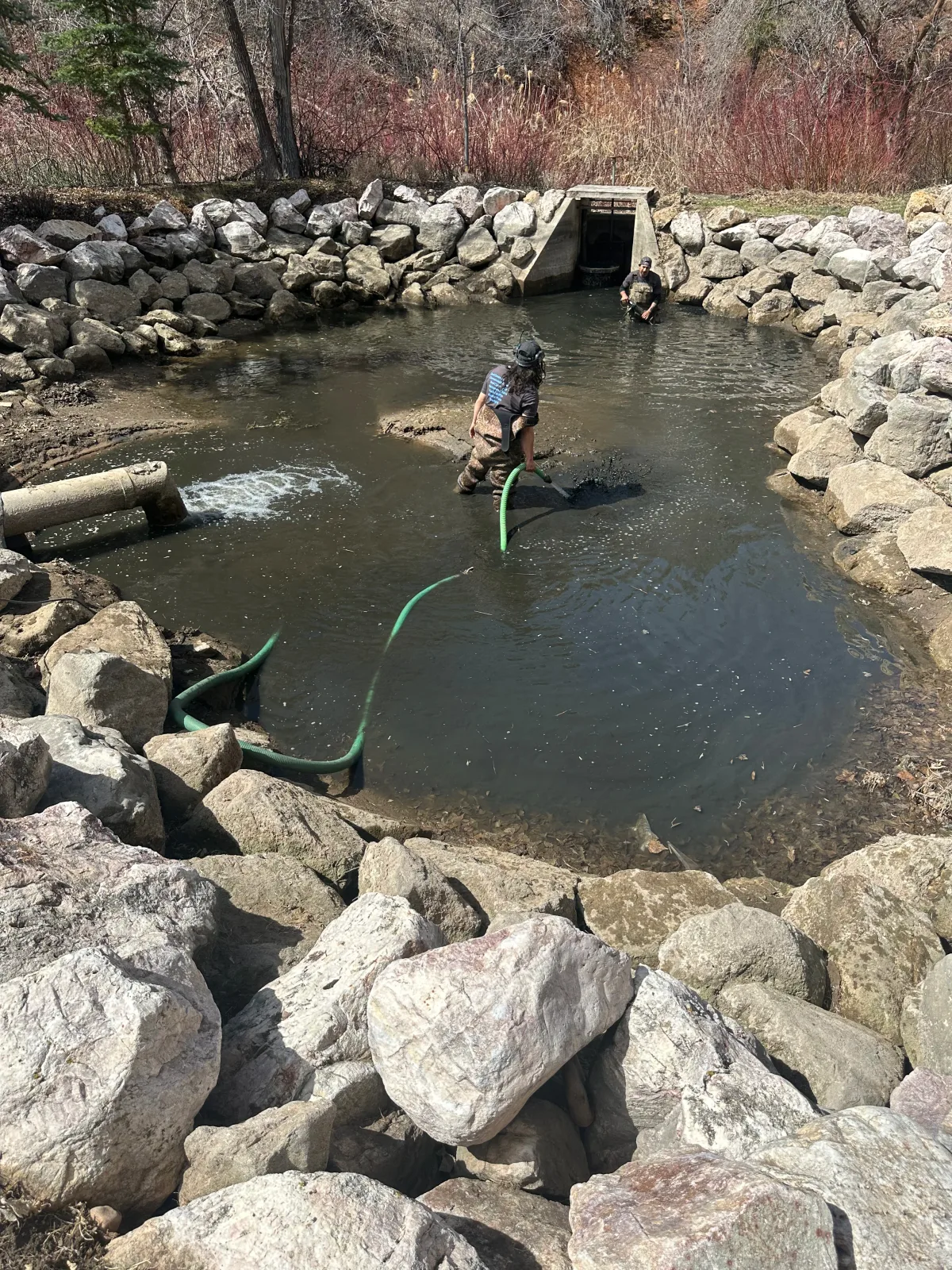
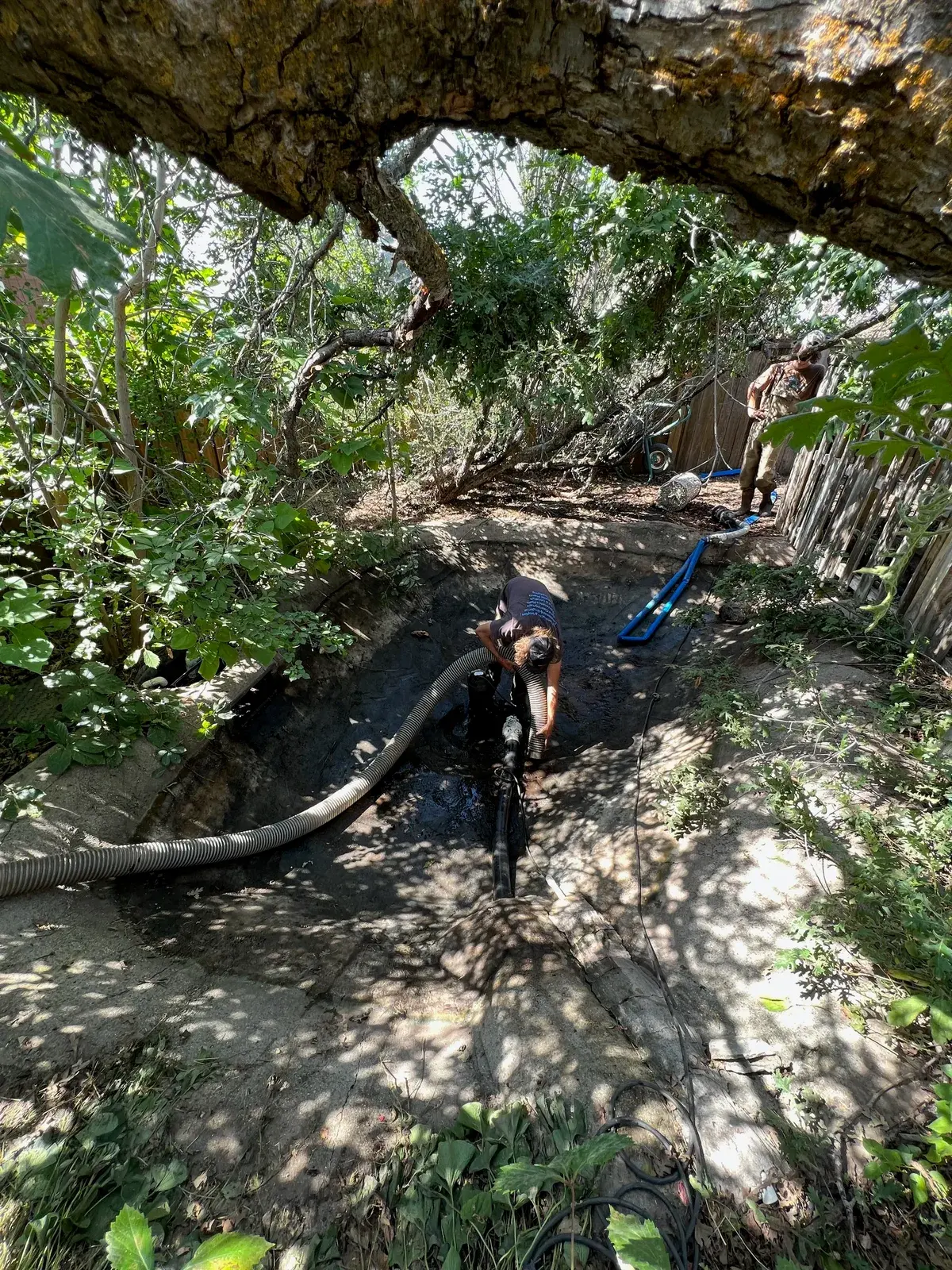
For a full cleanout, we drain the pond, move fish into holding tanks when needed, remove sludge, pressure wash the surfaces, and clean filters. The agreed scope depends on your pond.
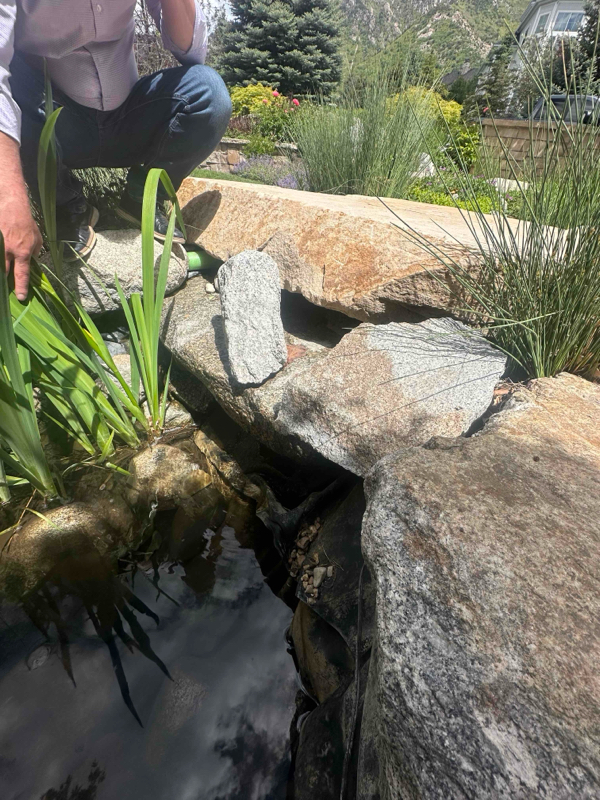
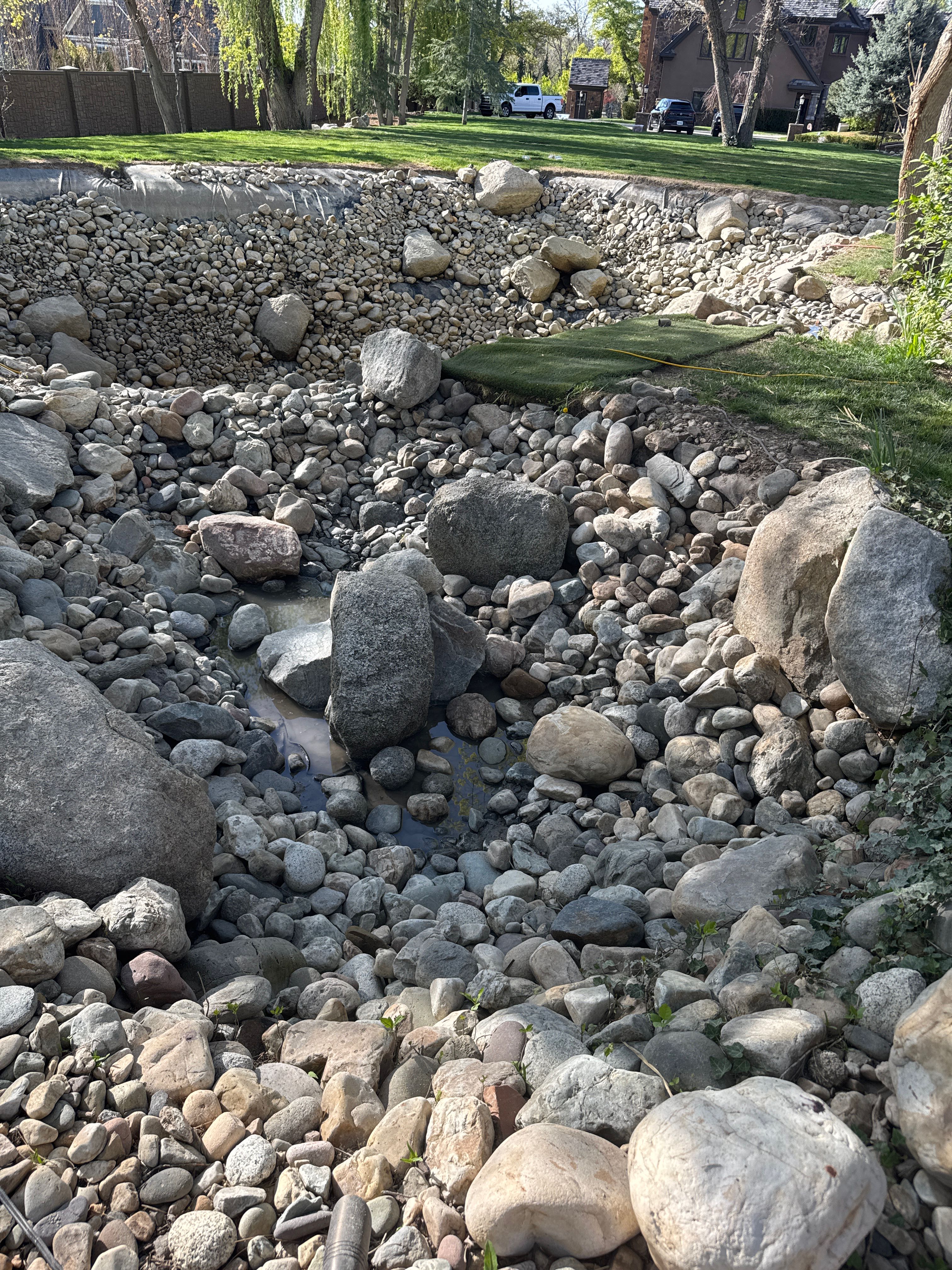
With buildup removed, we can look for liner damage, shifted rocks, and water escaping the feature. At a Pepperwood pond in Sandy, continued water loss after cleaning led to a separate repair: moving large rocks to find and patch close to a dozen rodent-damaged areas of liner.
Read about the Sandy repair project or see what a pond cleaning usually includes.
Your Observations Complete the Picture
We photograph visits and keep notes in your customer profile. Those records help us compare conditions over time, but we only see your pond while we are on site.
Notice a new or faster drop? Tell us when it started.
Watch waterfalls and streams for splashing or redirected water.
Report changes in fish behavior and growth obstructing the flow.
We generally check operation during a cleanout. A long refill or pending repair can delay startup; we explain what to watch when that happens. An equipment check is not a water-quality test.
Make a Plan for the Pond You Have
Tell us your city, approximate pond size, last cleaning date, and any fish, water-loss, or equipment concerns. We can discuss cleaning, ongoing maintenance, and winter preparation together.
Have hose and electrical access available for your visit. We will also discuss access to equipment and an appropriate location for removed debris.