Ultimate Pond Cleaning in Utah (2024): Deep Cleanouts, Fish-Safe Methods, and Clear Water
Here’s a pond cleaning truth that surprises people: a pond can look “fine” right up until it isn’t. Then you get cloudy water, string algae, low flow, or fish acting weird… and suddenly it’s urgent. If you’re in Utah, the swings in weather (and our hard water) make that tipping point happen faster than you’d expect. So this is the full guide — what to do, what to avoid, and when it’s smarter to call a pro.
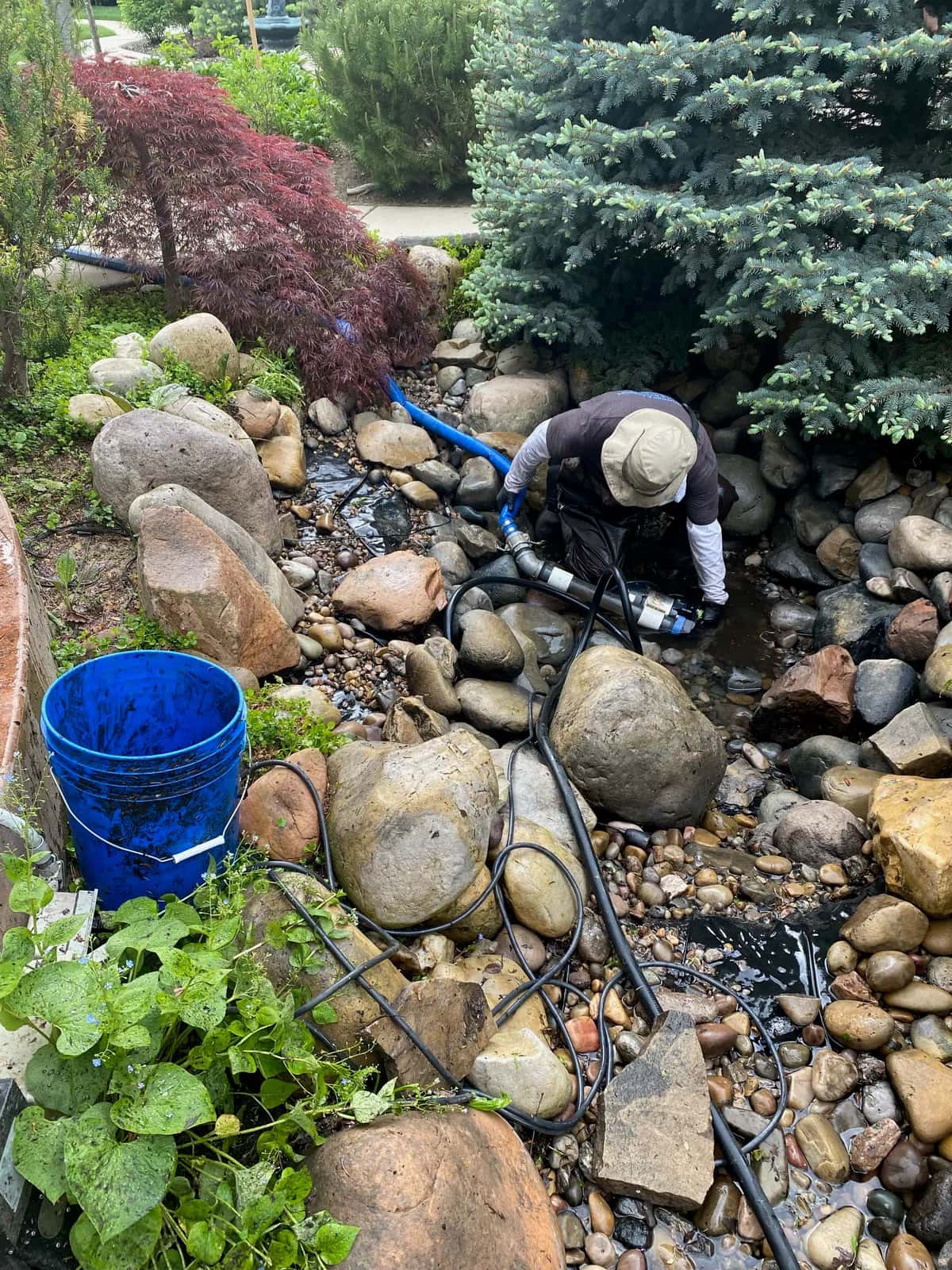
Real pond cleanout work: the goal is clear water and a stable ecosystem, not a “bleached” pond.
What “pond cleaning” really includes (and why it matters)
Pond cleaning isn’t just skimming leaves. A proper clean hits the stuff that actually drives problems: bottom sludge, clogged intakes, dirty filter media, and nutrient buildup that feeds algae. When those are addressed, your pond stays clearer with less effort afterward.
- Debris removal: leaves, plant waste, and fine sediment
- Sludge removal: the nutrient “fuel” layer on the bottom
- Filter + skimmer cleaning: restores flow and water clarity
- Fish-safe handling: if fish are present, stress management matters
Signs your pond needs a deep cleaning (not just a quick touch-up)
If you’re seeing any of these, your pond is telling you it needs more than a skim:
- Cloudy or green water that returns quickly
- Bottom sludge you can see (or smell)
- Waterfall is slower than usual / low circulation
- Filters clog faster than they used to
- Fish stress (gulping at the surface, lethargy, flashing)
Step-by-step: a fish-safe cleaning sequence (the calm way)
This is the sequence we like because it reduces “stirred up mess” and keeps the pond stable:
- Skim first: remove big debris so you don’t shred it into fines.
- Restore flow: clear baskets and check the intake so circulation doesn’t fight you (see pond pumps).
- Remove sludge: vacuum low spots and dead zones (see pond vac).
- Clean filtration correctly: mechanical media gets cleaned more often; biological media gets rinsed gently (see pond filtration).
- Stabilize water: test basics and use treatments only as support (see pond treatments).

Deep cleanouts often include rockwork rinsing/cleaning — but we aim for balance, not stripping everything.
DIY cleaning vs professional cleaning (when to call the pros)
DIY works best when the pond is small, the sludge layer is light, and your equipment is accessible. A pro makes sense when the pond has heavy muck, repeated algae, failing flow, or fish health risk.
- DIY is usually fine if: you’re doing routine seasonal upkeep and the pond stabilizes easily afterward
- Call a pro if: you have koi, chronic low flow, thick sludge, or water quality problems that keep returning
What a professional pond cleaning service includes (so you can compare fairly)
Professional cleaning is not “show up and skim.” It’s usually a combination of sludge removal, equipment checks, filtration cleaning, and a plan to keep the pond stable. If you want the full service version, start on pond cleaning.
Conclusion (the simplest path to clear water)
If you want clear, healthy water with less ongoing drama, remove the sludge, restore flow, and keep filtration and chemistry stable. If you want us to handle it, book a visit: schedule service or get an estimate.