Choose the method around the material
Light debris or lost pond depth? Start with what has accumulated, then consider access, fish, and how the material will leave the property.
Vacuuming can target loose sludge and accessible debris.
A dredging assessment looks at depth loss, equipment, and removal.
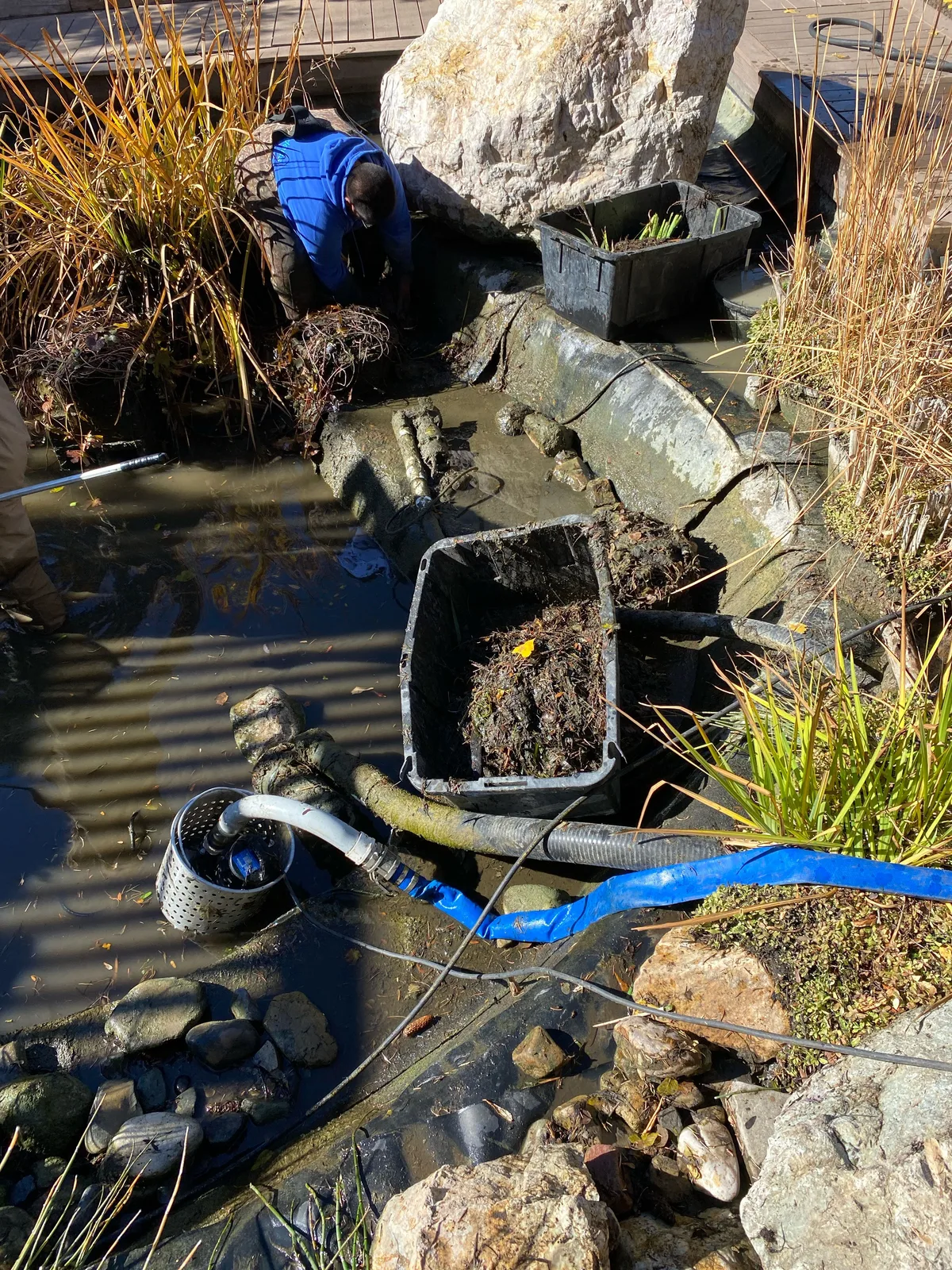
Draining may be appropriate when surfaces or hidden issues need attention.
Pond Vacuuming vs. Dredging: What Is the Difference?
Pond vacuuming and pond dredging both remove muck, sludge, and organic buildup, but they are not interchangeable. The right option depends on the size of the water feature, the depth of the buildup, and whether you are dealing with regular maintenance or a much larger restoration problem.
For smaller residential ponds, pond vacuuming is often the practical choice. For larger basins, retention ponds, and heavily silted areas, dredging may be the only realistic way to restore depth and remove major accumulations.
What Pond Vacuuming Is Best For
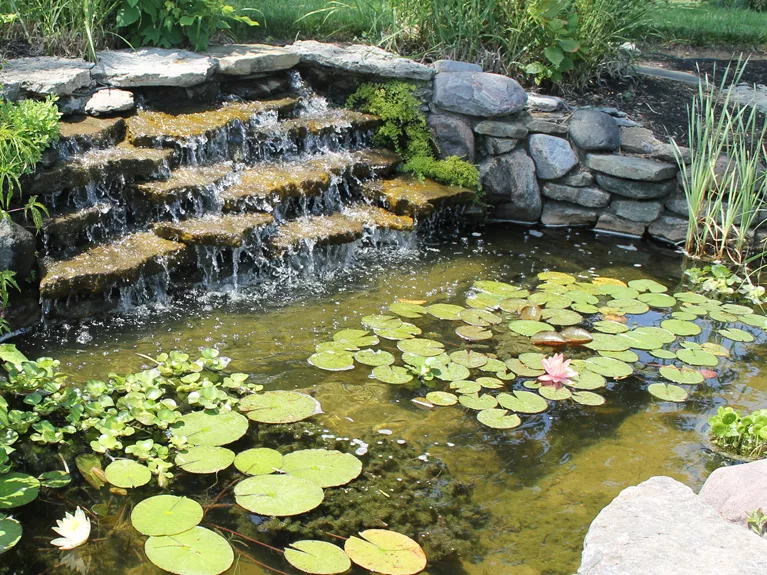
Pond vacuuming is ideal for decorative ponds, koi ponds, and smaller water features with manageable sludge buildup. It is designed to remove loose debris, fish waste, decomposing leaves, and softer bottom muck without the disruption of draining the pond completely.
- Routine maintenance
- Seasonal cleanups
- Fish-safe sludge reduction
- Removing organic buildup from smaller ponds
- Improving clarity and reducing odor
What Dredging Is Best For
Dredging is a much heavier solution. It is used when large ponds, detention basins, lake edges, or commercial water bodies have built up significant sediment and lost usable depth. If the issue is not just surface sludge but years of accumulated material, dredging is often the better answer.
Utah Water Gardens provides dredging for many residential and commercial ponds, but for very large lakes or complex projects, our trusted partner Dredge Authority can handle large-scale waterbody dredging across Utah and the region.
If you are doing a full yard or landscape cleanup (removing branches, old plants, or general debris), Icon Dumpsters offers roll-off dumpster rentals for household and landscape waste. (Note: They are not suitable for wet dredging muck or heavy sediment.)
- Large-scale sediment removal
- Depth restoration
- Commercial and HOA ponds
- Retention and detention basins
- Long-term neglect or major accumulation
Which Removes Muck Faster?
On a small decorative pond, vacuuming is usually faster and easier. On a much larger pond with heavy sediment buildup, dredging is more effective because it is designed for scale. The real answer depends on the site. Vacuuming is quicker for lighter maintenance. Dredging is stronger when the problem is deeper and much larger.
How Utah Conditions Change the Decision
Utah ponds often deal with leaf debris, algae growth, shoreline overgrowth, windblown sediment, and organic buildup from warm seasons followed by winter slowdown. Smaller features can usually stay ahead of these issues with regular cleaning and vacuum service. Larger ponds and basins can eventually need dredging when sediment buildup gets out of hand.
Cost and Disruption Considerations
Vacuuming is generally less disruptive and more affordable than dredging. Dredging is a larger project with more equipment, more planning, and bigger restoration goals. That does not make dredging bad. It just means it is solving a different level of problem.
When to Choose Vacuuming
- Your pond is residential or decorative
- The buildup is mostly organic sludge
- You want less disruption for fish
- The pond still has good structure and depth
When to Choose Dredging
- The pond or basin has lost depth
- The buildup includes heavy sediment, not just soft sludge
- The water body is too large for practical vacuuming
- You are dealing with restoration, not just cleaning
Need Help Choosing?
Utah Water Gardens helps property owners figure out whether a pond needs routine vacuuming, a full cleanout, or a more serious dredging plan. If your pond is filling in, looking neglected, or holding years of muck, we can help you choose the right approach.
From our Utah service visits
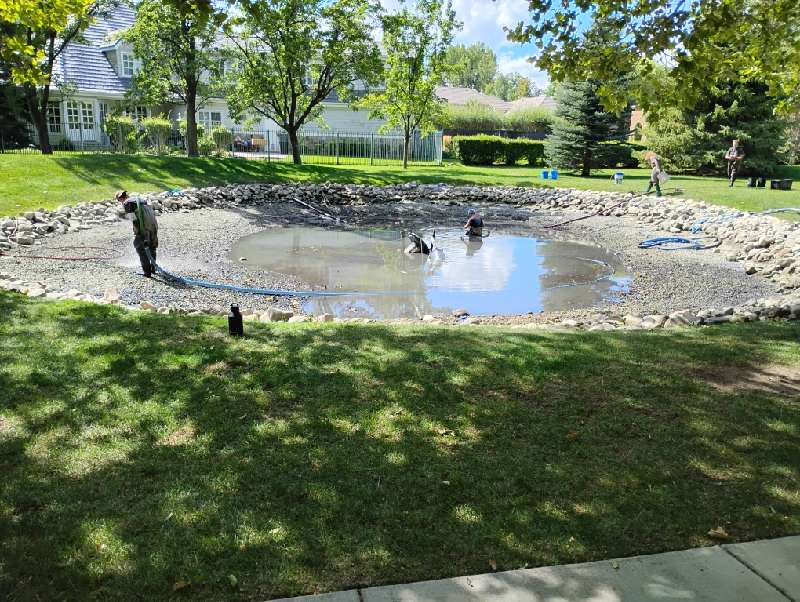
A Provo Project: When Sediment Needs More Equipment
At a property in Provo with two sediment-filled ponds, our crew used a large backhoe over multiple days to remove accumulated silt. It is an example of why a heavily filled pond needs a site-specific removal plan rather than a routine vacuuming visit.
Our equipment includes two vacuum units, pumps up to 50 horsepower for suction dredging and gravel work, and an amphibious machine. Access, sediment, liner construction, and disposal arrangements determine which equipment is appropriate. Larger ponds, often around a quarter acre or more, may warrant a dredging assessment, but size alone does not decide the method.
See photos of the Provo cleanout and other Utah cleaning projects. For heavy sediment, explore our pond dredging services; for recurring leaves and filter buildup, review ongoing pond maintenance.