
Pond Dredging & Sediment Removal
Mechanical and hydraulic dredging solutions across Utah and Idaho to remove built-up muck, restore depth, and bring aging ponds back to life.
Pond Dredging & Sediment Removal
Mechanical and hydraulic dredging solutions across Utah and Idaho to remove built-up muck, restore depth, and bring aging ponds back to life.
Pond Dredging & Sediment Removal
Mechanical and hydraulic dredging solutions across Utah and Idaho to remove built-up muck, restore depth, and bring aging ponds back to life.
Explore related store + service pages
Easy next steps: grab the right supplies today and book help if you want it done for you.
Shop & Supplies
- Retail Store (visit in person)Hours, location, and what we stock
- Pond SuppliesPumps, filters, treatments, lighting, tools
- Pond MaterialsLiners, plumbing, filtration, rock, build parts
- Pond AccessoriesLighting, tools, testing, decorative enhancements
- Plants & FishWater lilies, marginals, koi & goldfish
Services
- Pond CleaningDeep cleans, algae control, clarity reset
- Pond MaintenanceOngoing care plans and seasonal upkeep
- Pond ConstructionNew builds, rebuilds, and major enhancements
- Pond RepairTroubleshooting, leak detection, equipment fixes
- Pond Vacuum ServiceRemove sludge without a full rebuild
- Seasonal CareWinterization, spring startup, fall prep
What Is Pond Dredging?
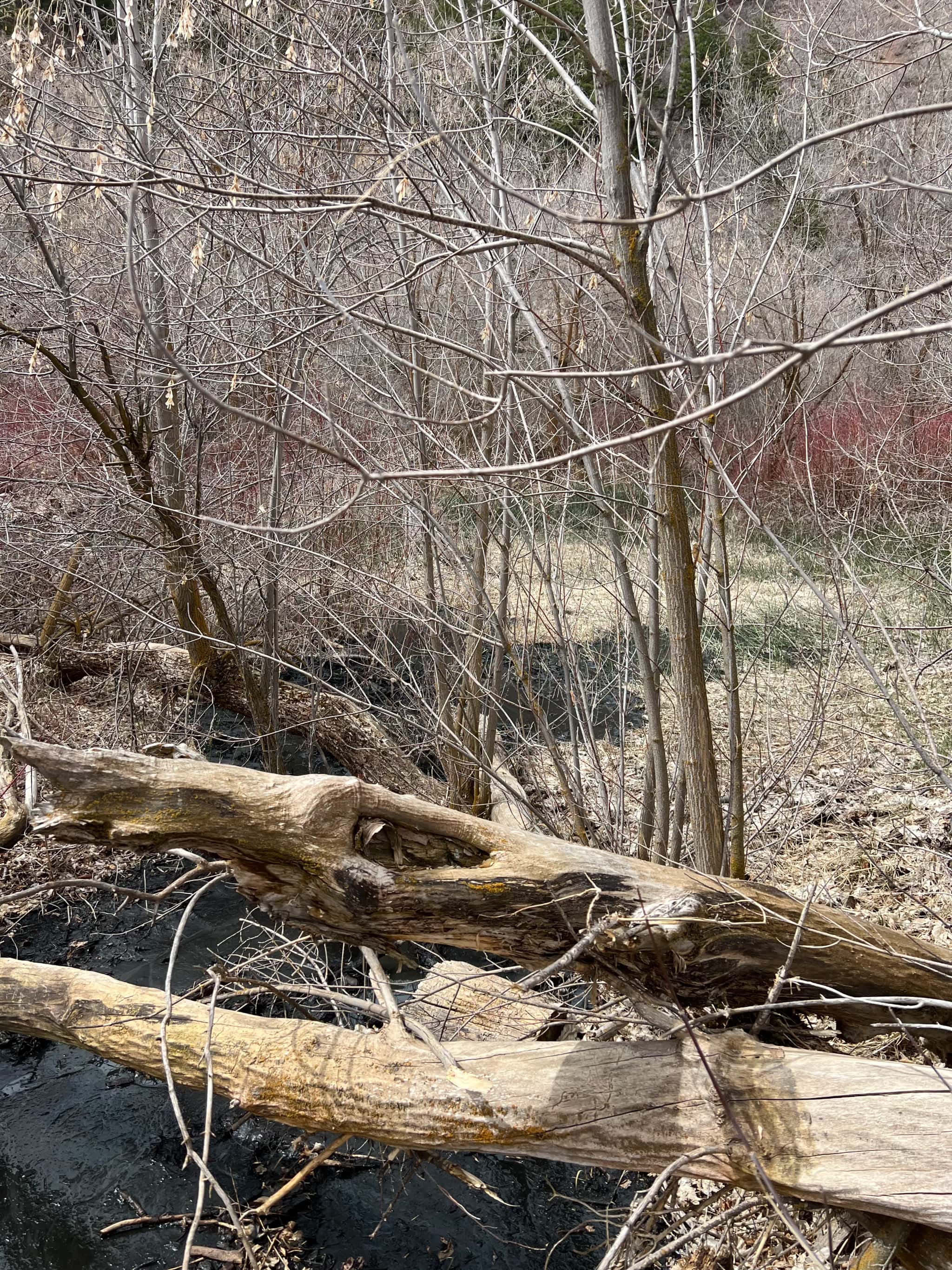
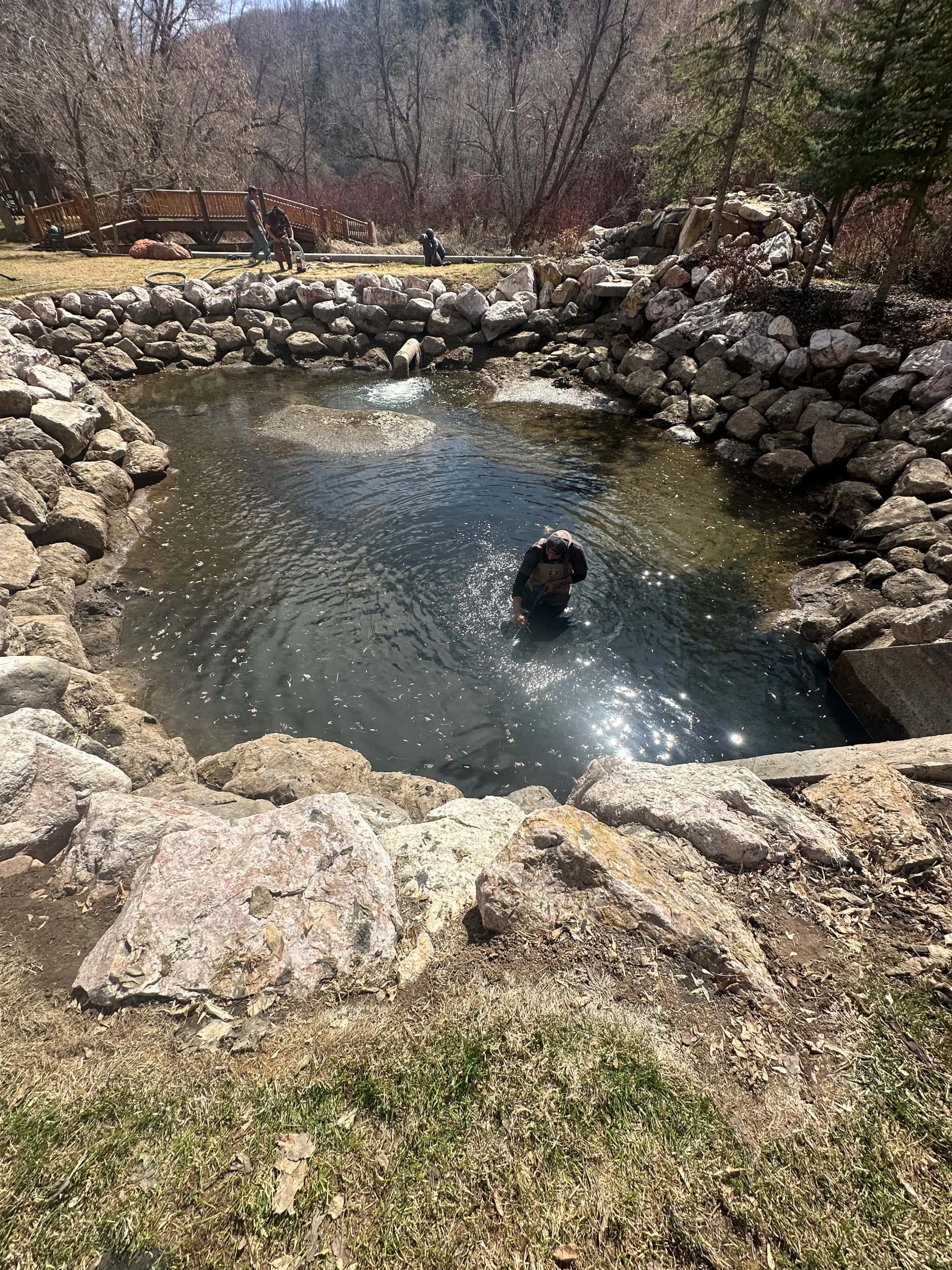
Pond dredging is the process of removing built-up sediment, muck, and debris from the bottom of a pond to restore its original depth and health. Over time, leaves, fish waste, runoff, and organic material settle to the bottom, making the pond shallower, murkier, and more difficult to maintain.
By physically removing that accumulated material—either mechanically with an excavator or hydraulically with a pump and pipeline—dredging improves water quality, prevents flooding, and supports a healthier aquatic ecosystem. While it is a larger project than routine maintenance, strategic dredging can add years of life to an aging or problem pond.
Utah Water Gardens provides complete dredging services for residential, commercial, and agricultural ponds throughout Utah and Idaho. We match equipment and methods to your site, liner type, and environmental requirements so the work is effective, safe, and well planned from start to finish.
Is Dredging Right for Your Pond?
Dredging is typically recommended for larger ponds or water features with substantial sediment accumulations that cannot be easily removed by hand or with simple pumps and shovels. The threshold between manual removal and full dredging depends on several factors, including pond size, sediment depth, and site access.
Our team assesses this threshold prior to accepting a job and will advise you on whether dredging is the most effective solution, or if alternative maintenance approaches would better serve your needs.
Key indicators that dredging may be needed: significant loss of depth (several feet of sediment buildup), chronic water quality problems despite routine maintenance, difficulty accessing the pond bottom for manual cleaning, or a pond that has not been dredged in many years and shows visible signs of filling in.
Methods of Pond Dredging
Every pond is different. We choose the dredging method based on size, access, liner type, sediment depth, and environmental considerations so we can remove as much material as possible with minimal disruption.
Hydraulic Dredging (Mechanical Pumping)
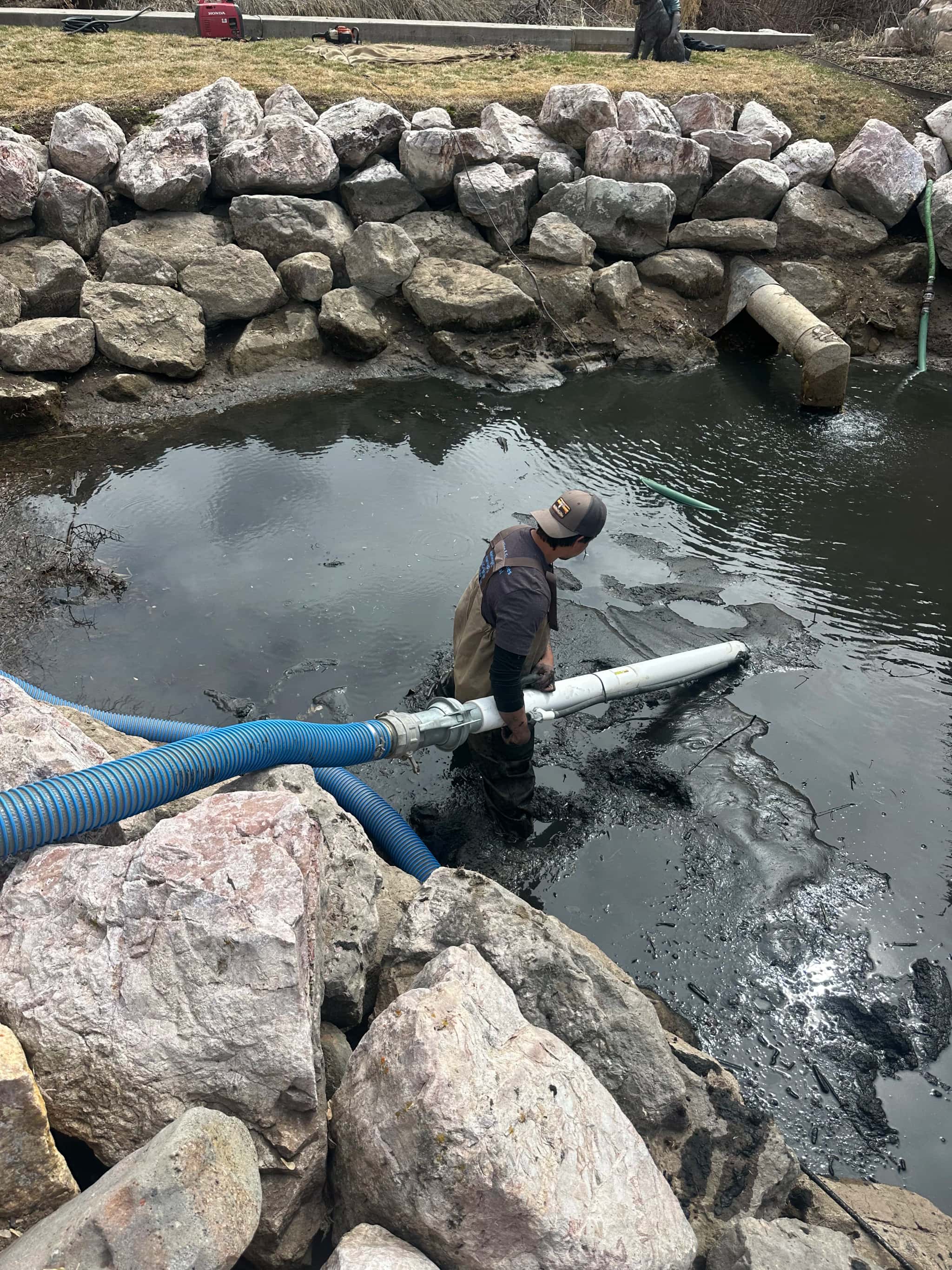
A powerful engine positioned at the pond edge pumps accumulated muck through hoses to a discharge location. The slurry can be sent to storage tanks, containment areas (such as "muscle walls"), or directly to unused fields and areas on your property.
This method is efficient for ponds with substantial sediment where the material can remain fluid enough to flow through the system. Discharge planning is critical to ensure proper handling and minimal site disruption.
Hydraulic Excavation Dredging
Uses excavators and heavy equipment to physically remove muck, sludge, and sediment from the pond bottom. This method is ideal for ponds with very heavy, compacted buildup or where access allows direct excavation.
Removed material can be stored in vac tanks or left on-site for beneficial reuse as fertilizer in garden beds, around trees, or in other landscaping areas. This approach provides precise control over sediment removal and placement.
Specialized Removal Methods
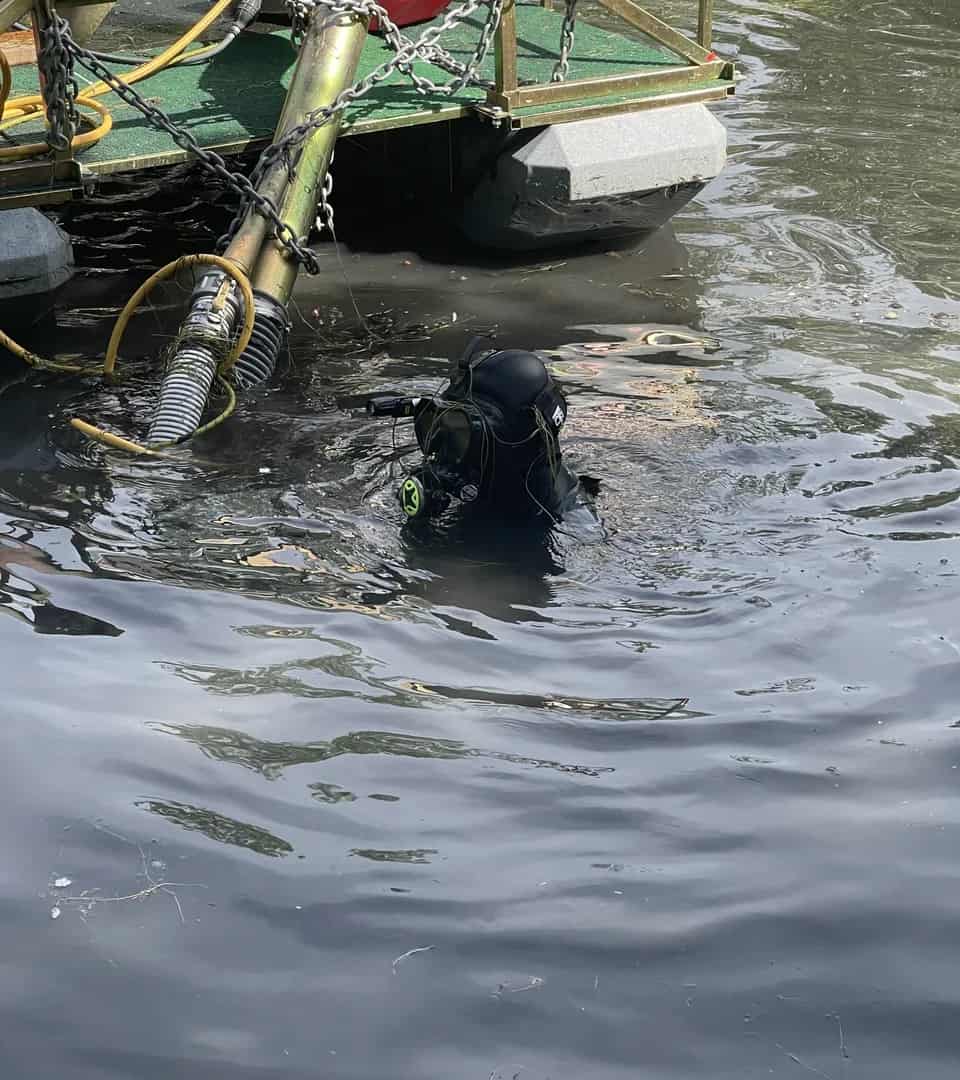
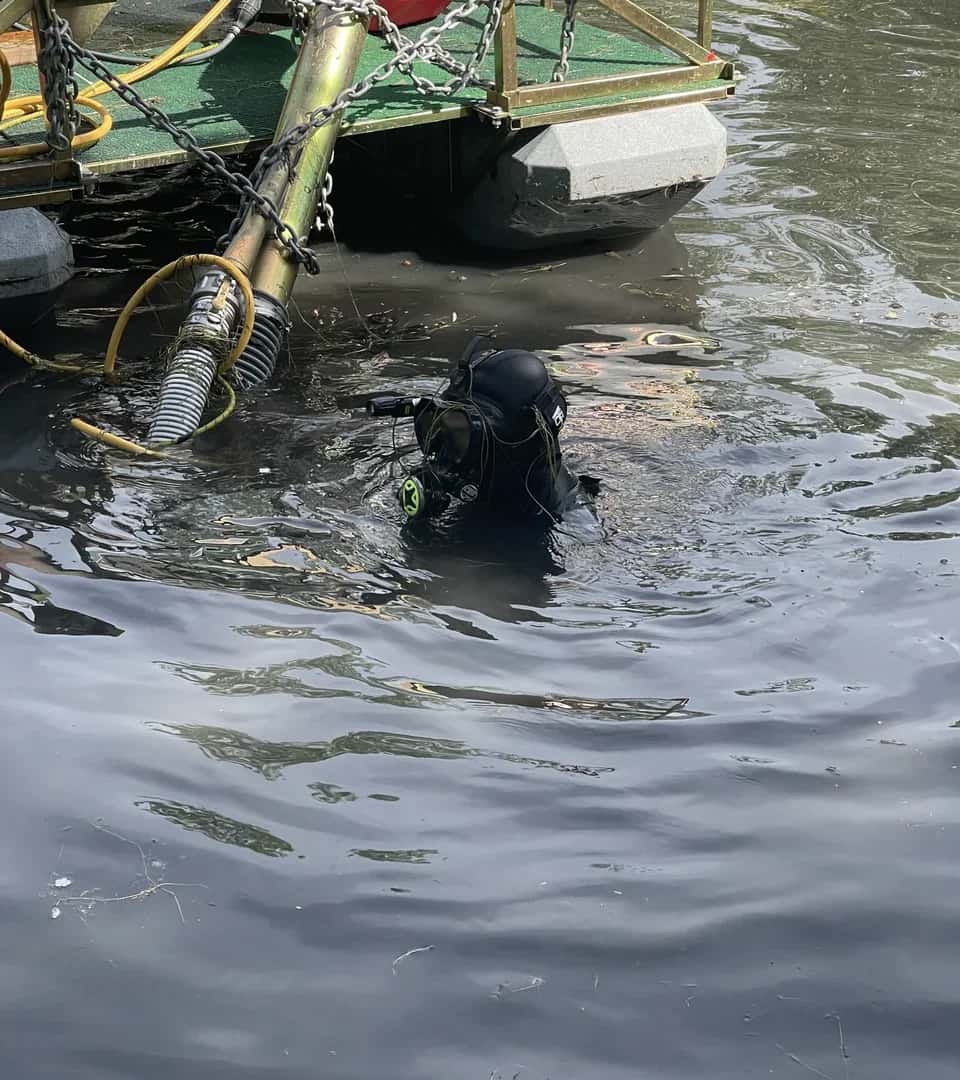
Scuba Diver Removal: For deeper ponds where traditional equipment cannot safely reach the bottom, trained scuba divers can remove sediment manually or position suction equipment underwater for more precise, targeted dredging.
Surface-Level Removal: For shallow ponds or buildup concentrated around pond edges, surface-level equipment and manual methods can effectively remove sediment without full-scale mobilization.
Maintenance Options: For smaller ponds or lighter buildup, we may recommend sludge pumps, targeted vacuuming, or biological support (bacteria and enzymes) to manage muck between major dredging projects and extend time between full dredges.
When to Perform Pond Dredging
Year-Round Availability
Dredging can be performed any time of year based on your schedule and availability. Our team is equipped to work in all weather conditions and temperatures, ensuring your project moves forward when it works best for you.
Preferred Timing
For ponds fed by live or active streams, we prefer scheduling at the beginning or end of the year when winter runoff is reduced and water flow is easier to manage. However, many customers notice their pond needs during spring and summer, which is also perfectly acceptable for scheduling.
Flexible Scheduling
Ultimately, scheduling depends on your availability and property access. We work with you to find the best window that balances your needs with site conditions, ensuring the project is completed efficiently and with minimal disruption.
Factors to Consider Before Dredging
Mobilization
Mobilization involves preparing and transporting heavy, large equipment (flatbeds, trailers) and setting up on your property. Setup typically takes half a day to a full day.
Mobilization charges appear on the bill due to the time and effort required for setup and breakdown/removal after the job is complete.
Permits & Regulations
Many dredging projects require permits (such as Section 404 under the Clean Water Act), local approvals, and sometimes environmental review. We help you understand what may be required in your area.
Timeline
Smaller ponds may be dredged in a few days; larger ponds and lakes can take several weeks or longer. We plan staging, dewatering, and restoration steps so you know what to expect from start to finish.
Environmental Impact
Dredging can temporarily increase turbidity and disturb aquatic life, even though the long-term result is usually a healthier pond. We schedule work for appropriate seasons and use methods that protect fish, plants, and downstream water where possible.
Disposal & Reuse Options
Disposal options are discussed with you prior to starting the job and managed actively during dredging.
On-site options: If you have sufficient land, sediment can be discharged to tree lines, garden beds, or similar areas as beneficial fertilizer, simplifying operations.
Off-site disposal: If on-site discharge isn't desired or possible, containment solutions (such as "muscle walls") can hold debris until vac units remove it for later disposal. Off-site disposal typically adds separate fees due to longer job time and the logistics of moving vac trucks in and out.
Why Pond Dredging Is Necessary
Restores Lost Depth & Capacity
Sediment buildup can dramatically reduce pond depth. For example, a 10-foot pond may lose 4 feet or more to accumulated muck, reducing capacity and usability. Dredging brings ponds back to their designed depth so they hold more water, handle storms better, and remain functional.
Removes Harmful Sludge & Gas Buildup
Removing accumulated organic matter eliminates toxic gas buildup at the pond bottom (such as hydrogen sulfide and methane) that can harm fish and degrade water quality.
Reduces Algae, Weeds & Invasive Plants
Removing nutrient-rich muck reduces the fuel that drives chronic algae blooms, excessive weed growth, and invasive aquatic plants that choke out healthy pond ecosystems.
Improves Fish Habitat Year-Round
Restored depth creates deeper, cooler refuge zones for fish during hot summers and provides better oxygen distribution in winter under ice, while reducing harmful trapped gases that can cause fish kills.
Prevents Flooding & Property Damage
Restoring pond volume reduces water displacement risks to surrounding property, basements, and infrastructure during heavy rain or runoff events.
Enhances Aesthetics & Water Clarity
Cleaner bottoms mean clearer water, better visibility, and a more attractive pond that adds value to your property.
Pond Dredging Services
Comprehensive pond dredging, sediment removal, and restoration services tailored to Utah and Idaho ponds, lakes, and water features.
Sediment & Muck Removal
We remove years of accumulated organic muck, silt, and debris from the pond bottom to restore usable depth and eliminate problem sludge.
Pond Depth Restoration
Targeted dredging restores original design depth, improves circulation, and creates deeper refuge zones for fish during hot summers and cold winters.
Mechanical & Hydraulic Dredging
We match the method—mechanical excavation or hydraulic pumping—to your pond size, access, liner type, and environmental requirements.
Sediment Handling & Disposal
From on-site dewatering to hauling and beneficial reuse, we plan how removed material will be handled, stored, or repurposed safely.
Water Quality & Ecosystem Health
Dredging reduces nutrient buildup that feeds algae, improves clarity, and helps restore a balanced, oxygen-rich aquatic environment.
Project Planning & Permits
We help you navigate access, timing, and regulatory considerations so your dredging project runs smoothly from estimate through completion.
Utah Pond Dredging Service Areas
We provide pond dredging, sediment removal, and restoration services across the Wasatch Front and beyond. Select your Utah city to view local information, or scroll to our Idaho service areas to plan a dredging project anywhere in Utah or Idaho.
Idaho Pond Dredging Service Areas
We serve pond dredging clients across Idaho, including the Treasure Valley, Magic Valley, Eastern Idaho, and North Idaho. If you do not see your city listed, contact us and we will confirm scheduling options.
Magic Valley
Eastern Idaho
North Idaho
Last updated: 2025-12-12 • Looking for quick answers? See Pond & Water Feature FAQs.