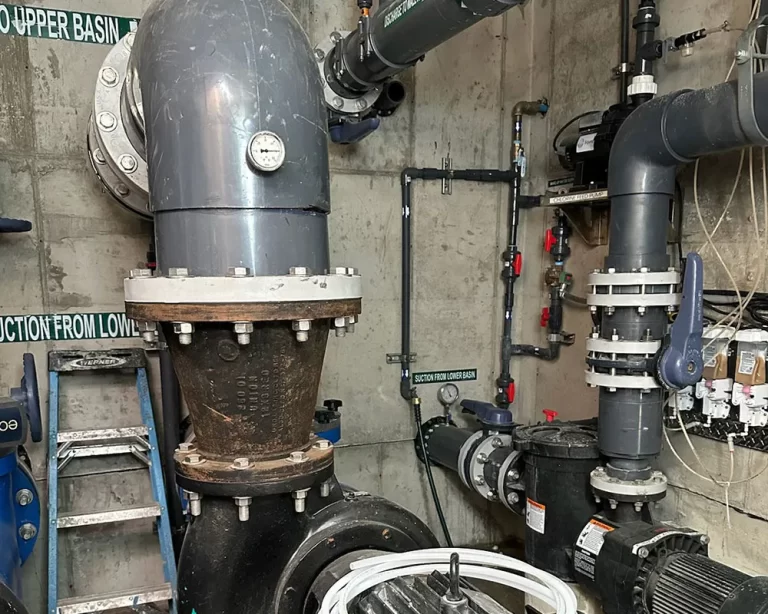
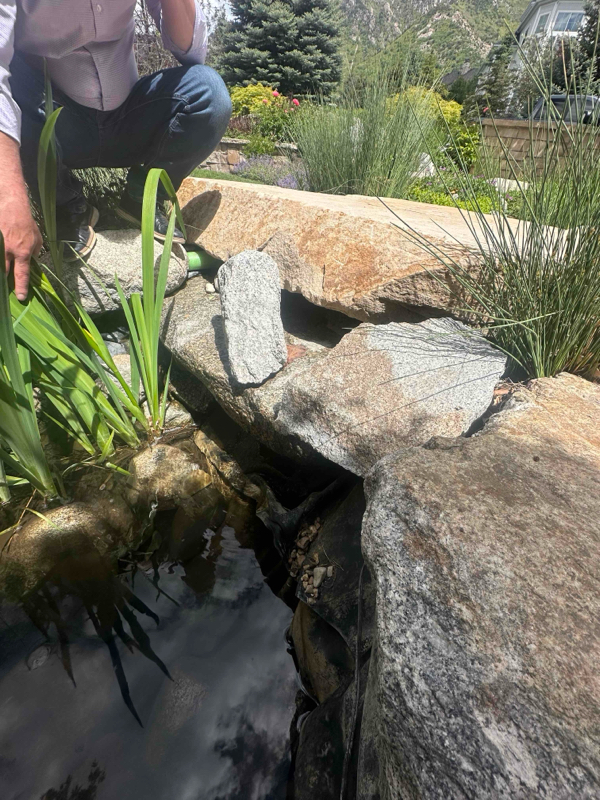
Why Is My Pond Pump Losing Flow?
A blocked skimmer, low water level, dirty filter, plumbing obstruction, or electrical problem can look like pump failure. Before buying a replacement, help us understand what changed and how the feature used to run.
Three Steps Before Buying Another Pump
Make it safe
Stop a pump that is smoking, grinding, or running below its required water level. Disconnect power before inspection.
Document what changed
Photograph the feature, water level, and pump label. Tell us whether flow dropped suddenly or has always been weak.
Choose the right help
Bring us photos or a safely disconnected pump. Difficult access, wiring concerns, or an unclear cause may need an on-site assessment.
When to Stop the Pump and Call
Stop operation if you notice smoke, a burning smell, unusual grinding, or a pump running without the water level its design requires. Shut power off from a safe, dry location. Do not reach into the water or touch suspect electrical equipment to investigate.
Before inspecting a pump, disconnect its power and confirm you have isolated the correct equipment. Never put fingers near an energized impeller. Some pumps can restart automatically after cooling. Damaged wiring, repeated electrical trips, or unsafe access require professional help.
If you have fish, tell us when circulation stops so we can discuss dedicated aeration while the problem is addressed. Call 801-590-8516.
Common Reasons a Pond Pump Has Low Flow
- Blocked skimmer or intake: leaves and pine needles can restrict the water reaching the pump.
- Filters needing attention: accumulated debris may restrict flow through the system.
- Low water: watch both the pond and the pump compartment. A pond can look full while an obstructed skimmer struggles to supply the pump.
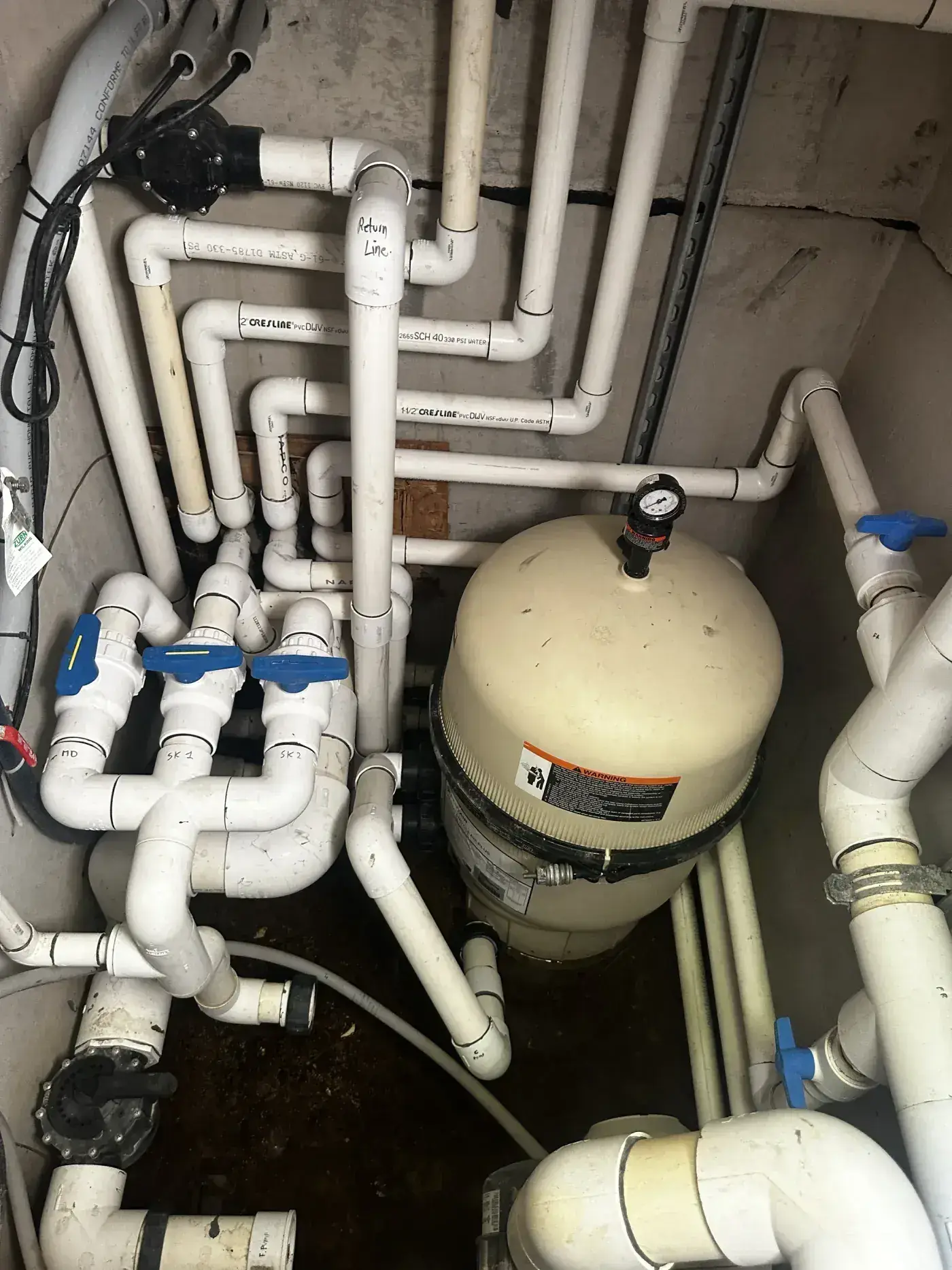
- Plumbing restrictions: an obstruction in a line can reduce flow even when the pump itself operates.
- Equipment or power trouble: the cause may be the pump, its controls, or the property's electrical supply.
- A mismatch from the start: if the waterfall has always disappointed, the original pump or plumbing may not suit the intended flow.
Debris and interrupted water supply are more useful clues than water clarity alone. A dirty-looking pond does not automatically prove the pump has failed.
How Cleaning Helps Protect the Pump
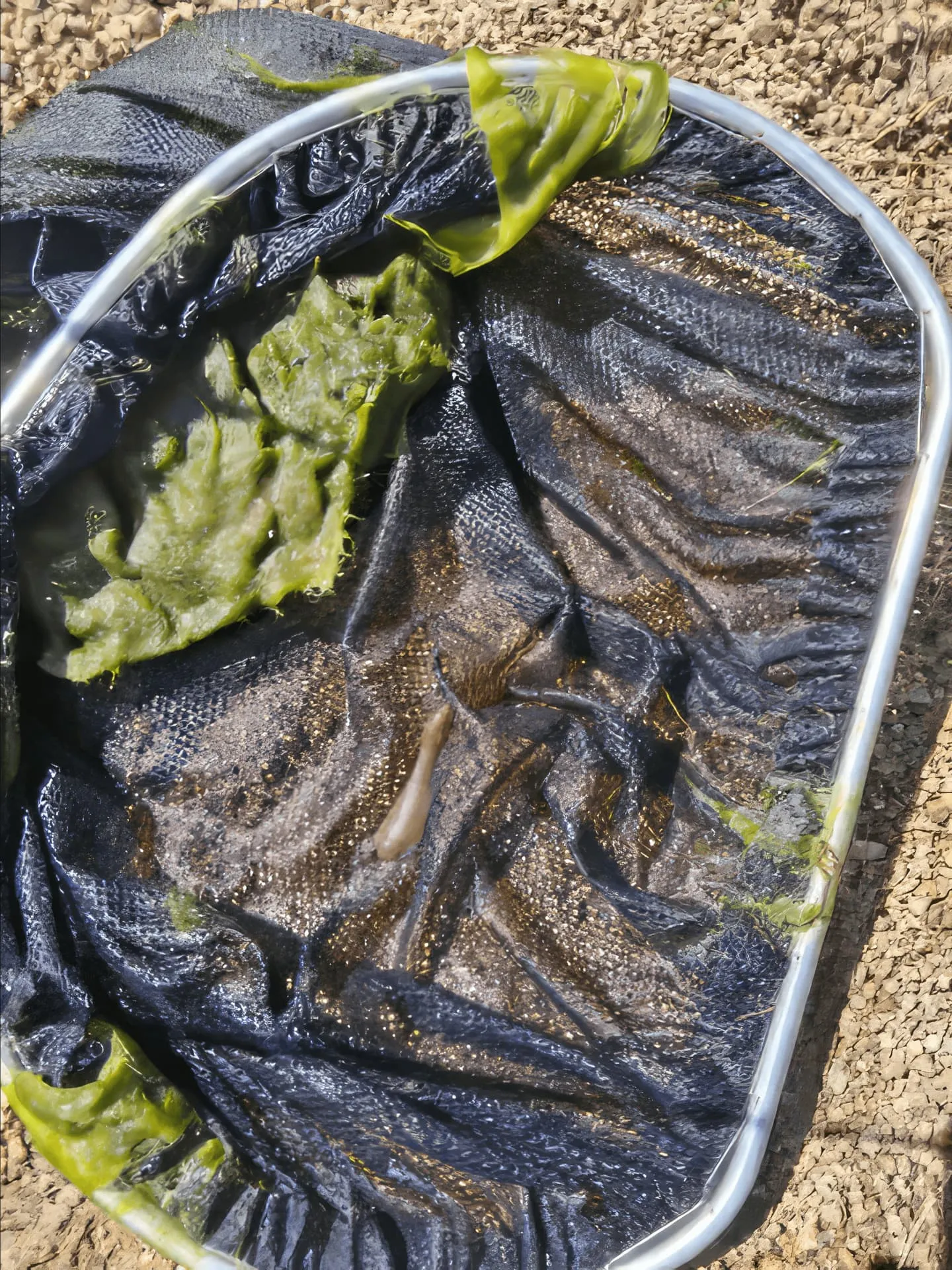
Keeping skimmers, filters, and intake areas clear helps water reach the equipment. Our crew often finds that neglected debris and water-level problems are part of the story. Regular pond cleaning and maintenance can address those conditions before they cause further trouble.
Cooling requirements depend on the model. Many submersible pumps require a specified operating water level; external pumps have different requirements. Follow the manufacturer's instructions rather than assuming every pump must be submerged or can run dry.
If water is disappearing from the feature, use our pond leak or evaporation guide to understand the observations we need.
What Can a Homeowner Check?
Start with observations: photograph the pond level, skimmer area, waterfall flow, and accessible equipment label. Tell us whether the change was sudden or gradual and whether you hear an unusual sound. Avoid running a struggling pump just to record a video.
If you are comfortable with the equipment, routine accessible basket or filter maintenance should follow its instructions with power safely disconnected. Stop if access, wiring, or disassembly is uncertain.
Some pumps are difficult to remove. A plumbing union can be hard to reconnect or cross-threaded, creating a second problem. You do not need to dismantle the feature before calling us.
Should We Clean, Repair, or Replace It?
First distinguish an obstruction or maintenance issue from a failed motor. A full pond cleaning can help when accumulated debris is the underlying problem, but it will not repair an electrical fault or failed pump.
Repair decisions depend on labor, parts, condition, and replacement cost. In our experience, repairs often become more worth investigating on larger pumps, especially above roughly five horsepower. That is a starting point for a discussion, not a fixed cutoff or a promise that repair is economical.
Solids-handling capacity matters
Pump designs differ in the material they can pass. Effluent and sewage pumps are different categories, but neither label alone establishes suitability for a pond. Match the actual model's intended use, solids capability, continuous-duty requirements, and flow performance to the feature.
More horsepower is not automatically the answer
If you liked the previous flow, the old label and plumbing dimensions help us identify a comparable replacement. If it was under-delivering, tell us before we match it. We can assess the installation on site, including whether the stream and basin can contain increased flow. Read our pond pump sizing guide for the factors beyond the number on the box.
If the cause is still unclear, explore our pond repair services and tell us what changed before scheduling an assessment.
Pond Pump FAQs
Does weak waterfall flow mean I need a new pump?
No. A blocked skimmer, dirty filter, low water, or plumbing restriction can reduce flow. Identify the cause before replacing equipment.
Why does my pump work at the store but not at home?
The installed system may have an electrical-supply issue or a plumbing obstruction. A store test provides useful information but does not reproduce every condition at your property.
Can I install a stronger pump for a bigger waterfall?
Possibly, but first check pump sizing, plumbing, and whether the stream and basin can contain the increased flow. Tell us if the previous pump under-delivered so we can assess the system rather than simply match it.
Should I bring my pump to the store?
Yes, if you can safely disconnect and remove it. Otherwise, begin with overview photos, a readable pump label, and plumbing details. Do not risk electrical injury or damage to connections to bring it in.
Is repairing a pond pump worth it?
It depends on parts, labor, condition, and replacement cost. Larger pumps may warrant a repair assessment; smaller pumps can cost more to repair than replace. We discuss the practical options for your equipment.
Bring Your Pump Questions to Utah Water Gardens
- Clear photos of the full feature and the problem area.
- A readable photo of the pump label and model number.
- Plumbing size and photos of connections.
- What changed, when it changed, and whether you liked the old flow.
If you can safely disconnect and remove the pump, you are welcome to bring it to our store for identification. We may be able to test it there. A pump working at the store does not rule out a power-supply problem or an obstruction in your installed plumbing.
Visit our aquatic nursery at 5911 S 1300 E, Salt Lake City, UT 84121. Show us your photos, talk face-to-face, and discuss equipment or a service visit.
Ask about pump help or a service visitText photos to 801-590-8516
Technical References
Operating limits vary by model. Tsurumi's motor-protection explanation describes overheating protection and automatic restart. Liberty Pumps' pump-type reference explains differences in intended use and solids handling. These support the general guidance here; follow the instructions for your own equipment.