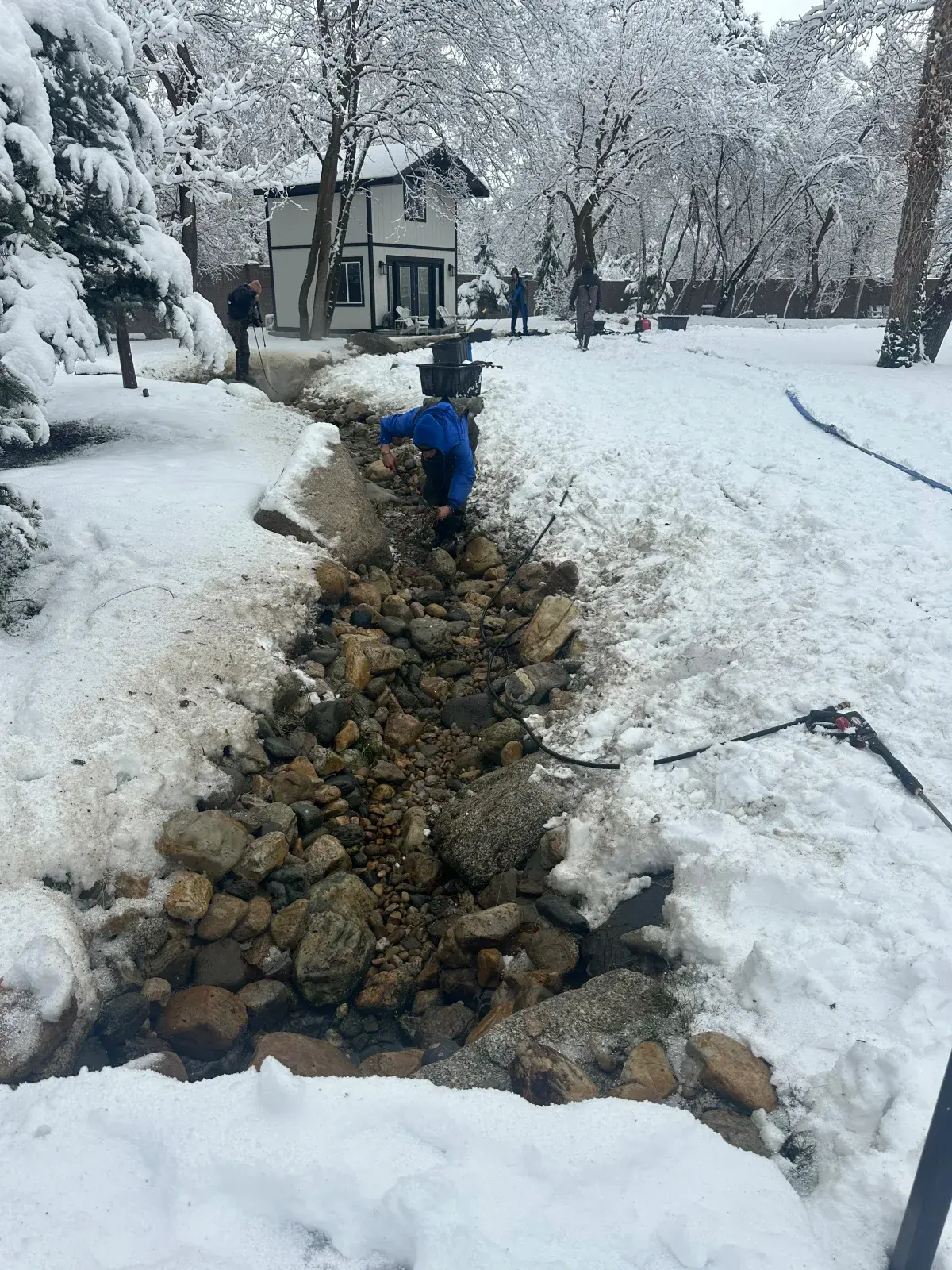
Freezing Waterfall or Falling Water Level? Start with Photos.
Before we recommend running or shutting down a feature, we need to see the whole situation. Pond design, the waterfall, the pump basin, and where ice is forming all matter.
If the running feature is sending water outside the pond, stop the pump and contact us promptly. After shutdown, freezing may prevent you from restarting it. If you have fish, tell us immediately so we can help you arrange dedicated aeration and assess whether a de-icer is needed.
Why Pond Winterization Matters in Utah
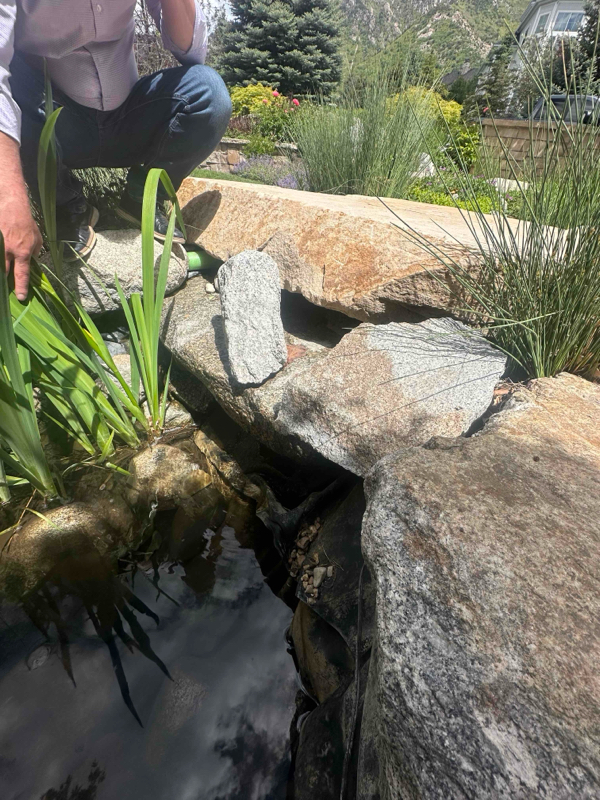
Ice can change the path water takes through a feature. We call this ice cascading: splashing water freezes, the buildup grows, and flow can eventually be redirected outside the pond. Water loss can leave pumps vulnerable and lead to further problems with frozen plumbing.
Watch especially closely during very cold nights and after major snow, rain, or wind events. A system that worked yesterday may behave differently after a weather change.
Show Us the Whole Feature, Then the Problem
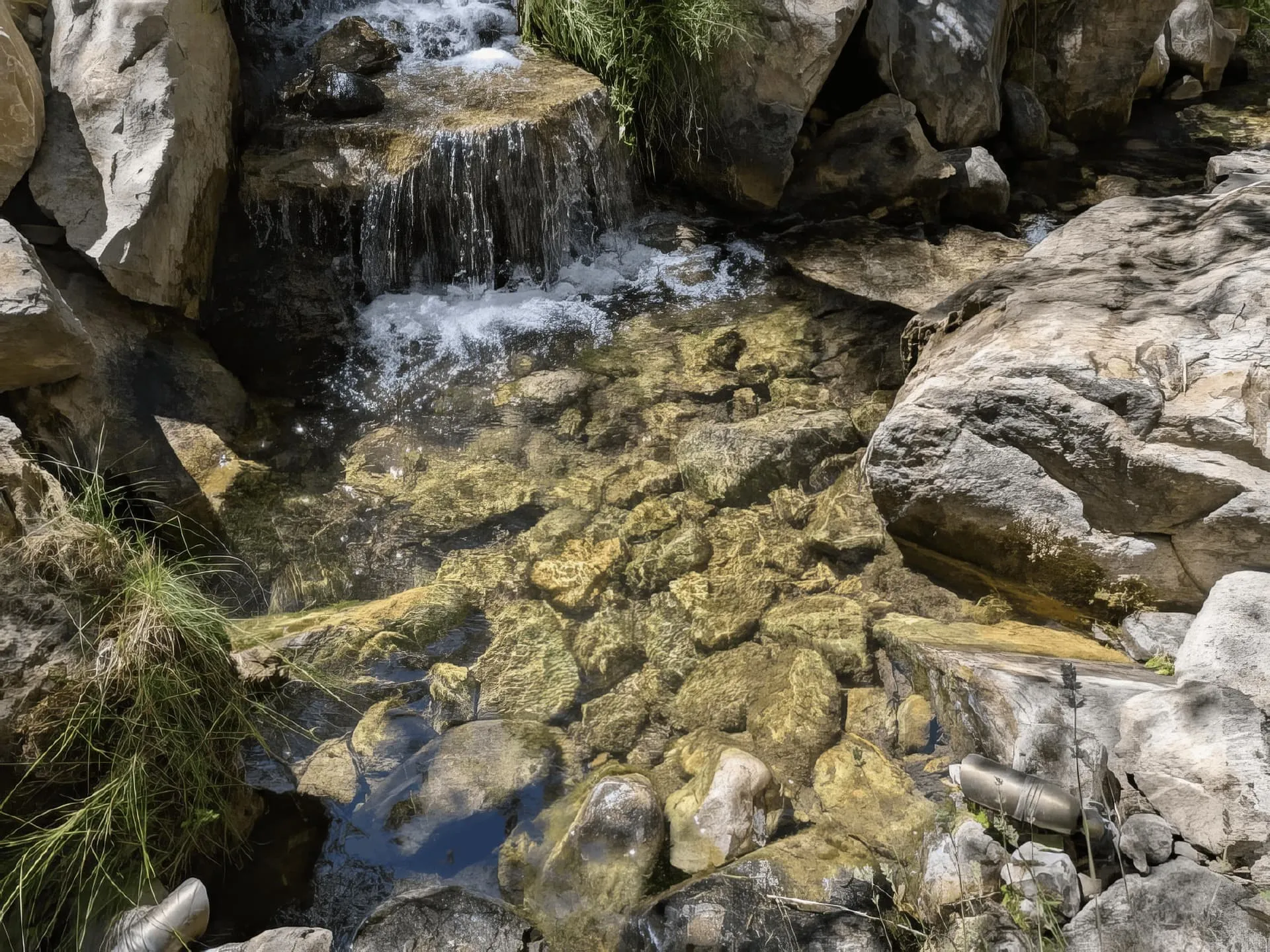
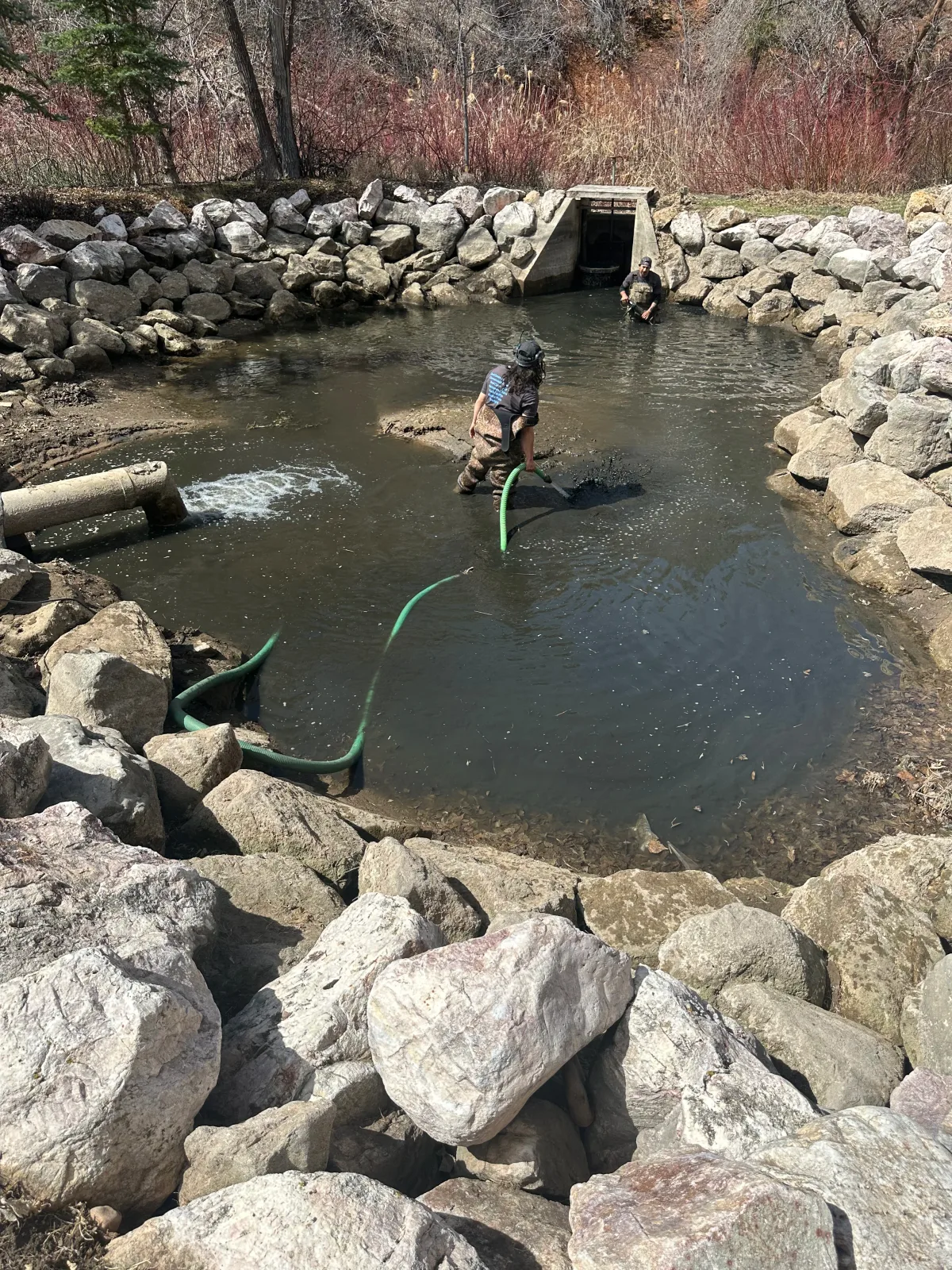
- Start wide: take overview photos from a couple of angles so we can see the pond, stream, and waterfall together.
- Move closer: show the ice, low water level, escaping water, or equipment that concerns you.
- Explain what changed: tell us how you noticed the problem, whether the pump is running, and whether fish are present.
Photos help us assess the situation and plan a visit; they may not reveal every hidden pipe or basin.
Should You Keep the Pump Running?
There is no single answer for every pond. We look at whether water remains contained within the channel as ice forms. A stream with room around the flow may be a better candidate than one already running to its outer edges.
If water is escaping, stop the pump and call us. Do not assume it can simply be switched back on after a freeze. We need to assess the pump, plumbing, and return path before recommending a restart.
Fish Protection: Dedicated Aeration
For winter planning, we do not count waterfall splash as a substitute for a dedicated pond aerator. An aerator supplies air through a submerged diffuser, creating bubbles that rise through the water.
If shutting down the waterfall also removes your fish pond's circulation, contact us promptly about appropriate aeration. Diffuser placement must suit the pond's depth and winter conditions; the deepest point is not automatically the right location.
What a Pond De-Icer Does
A de-icer helps maintain an opening in the ice immediately around the unit. It does not heat the entire pond and is not a substitute for an aerator.
A thermostatically controlled model switches on in response to cold water near its sensor; the exact operating temperature depends on the model. If the aerator is not maintaining an opening during cold weather, we recommend assessing a de-icer as additional protection. Follow the equipment instructions and continue checking the pond throughout winter.
What Winterization Usually Includes
- Removing leaves, sludge, and dead vegetation before they accumulate under ice.
- Cleaning filters and inspecting the pump and general operation.
- Deciding which equipment can keep running and what needs shutdown protection.
- Planning dedicated aeration and a de-icer where appropriate for fish ponds.
- Draining vulnerable lines and installing suitable caps or plugs when needed.
Line protection and replacement equipment depend on the feature and may involve additional work. We recommend a quote based on your pond.
Leaves and Sludge Need Attention First
We typically plan fall cleanouts during September, October, and November, with the workable window narrowing as weather gets colder. When practical, clean before the main leaf drop and install netting afterward.
Net removal can be scheduled. Let us know when your local forecast shows an impending snow event so we can coordinate removal before snow loads the net. Different areas can have very different forecasts.
Explore pond cleaning and our fall pond care guide.
Common Winterization Mistakes
- Assuming every waterfall can safely run through freezing weather.
- Waiting to report water loss until the pump or basin is already affected.
- Shutting down a fish pond without a plan for dedicated aeration.
- Expecting a de-icer to warm the whole pond.
- Leaving leaf netting in place for a major snow event.
- Assuming hidden plumbing and equipment are the same on every property.
A Hidden Heating System in Holladay
At a Holladay stream and waterfall, snow and ice concealed a hidden pump basin. What initially looked like a debris blockage turned out to involve an unusual installed heating system whose power had tripped.
Our team identified the system, restored its operation, and thawed the feature enough to get it running again. The lesson is to understand the actual equipment before choosing a remedy. This was an unusual installation, not a standard pond de-icer or a recommendation to reset a repeatedly tripping circuit.
Send Photos. Talk to Our Team. Make a Plan.
Call or text (801) 590-8516, submit photos through our website, or email contact@utahwatergardens.com. For a developing water-loss problem, call promptly rather than relying only on a submitted message.
Our crews are not on their regular schedules during winter, and weather and access affect availability. Early notice helps us plan; an immediate emergency visit is not guaranteed.
You can also visit our aquatic nursery at 5911 S 1300 E, Salt Lake City, UT 84121 to show us pictures, discuss equipment, and see our ponds. We document service visits with photos and notes to help diagnose changes later.