Before You Buy Another Algae Treatment
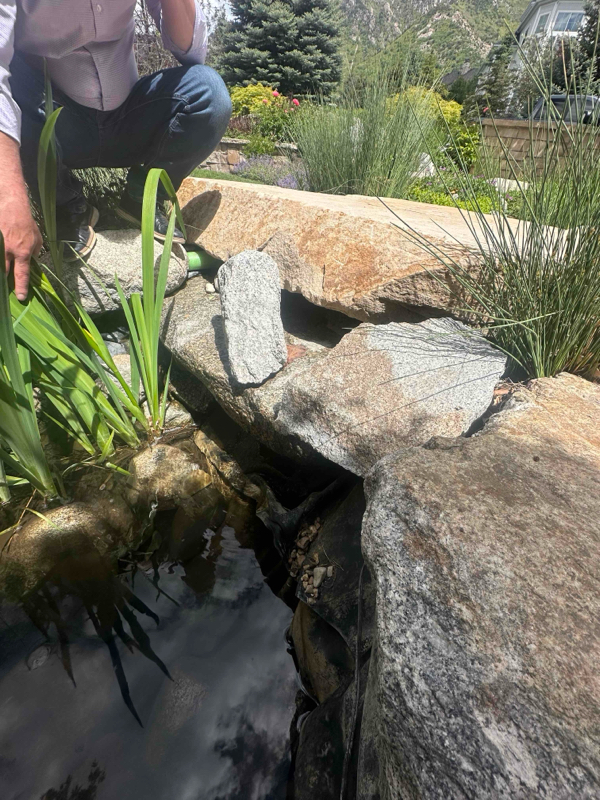
Our first question is simple: when was your pond last cleaned? Then we look at the algae, water source, sunlight, plants, fish, and equipment. Finding what feeds the problem helps us recommend a useful next step.
Start with pond photos and cleaning history.
Remove buildup and assess plants and filtration.
Plan seasonal cleaning and regular maintenance.
Why Algae Is Such a Common Utah Pond Problem
Strong sunlight, warm weather, nutrient buildup, and under-filtered areas create opportunities for algae. The goal is a healthy, manageable pond, rather than removing every trace of growth from every rock.
The Two Common Types of Pond Algae
Green water
Suspended microscopic algae can make water look green throughout. A correctly sized and maintained UV clarifier can help treat this algae as water passes through the unit.
String algae
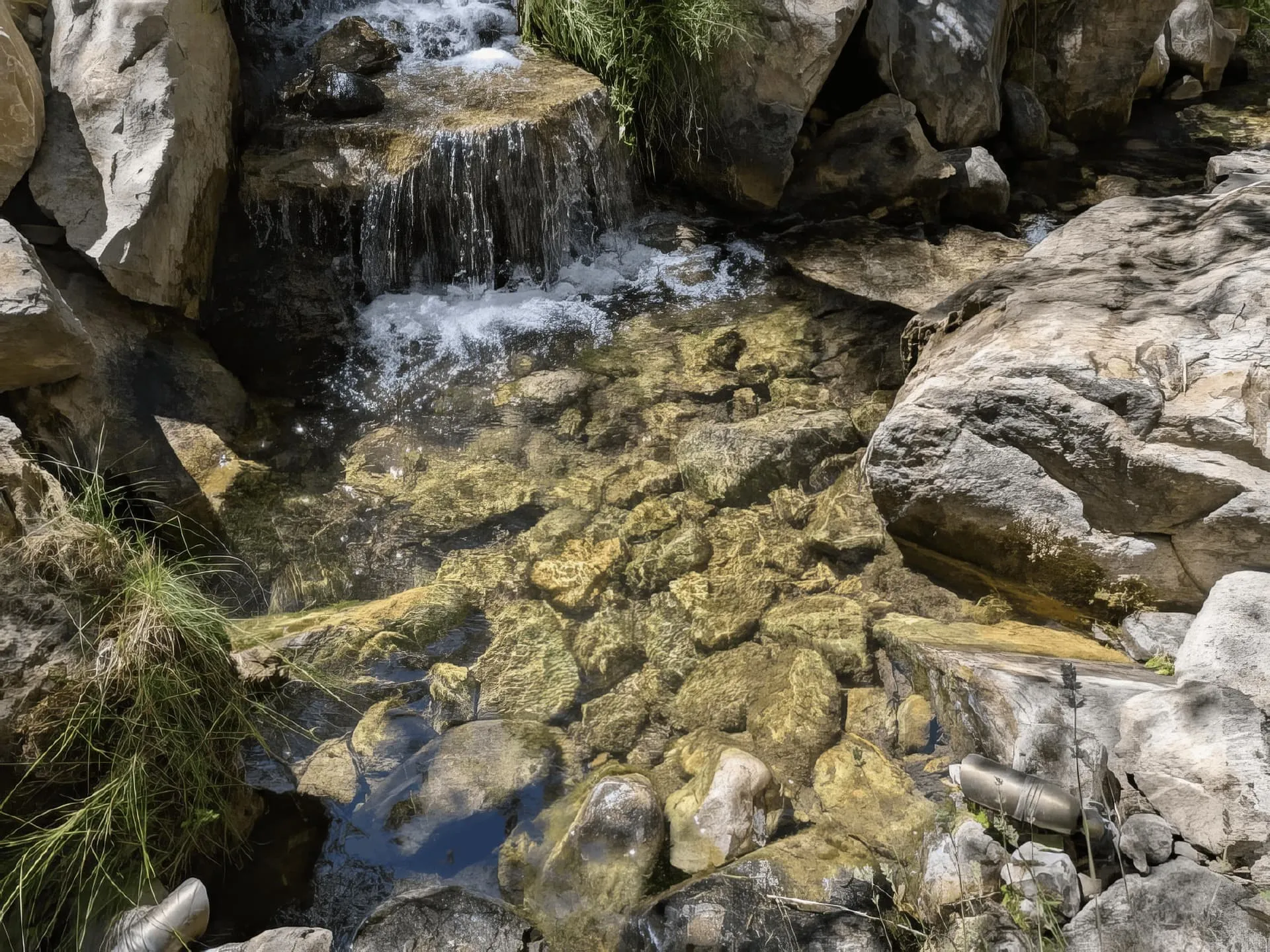
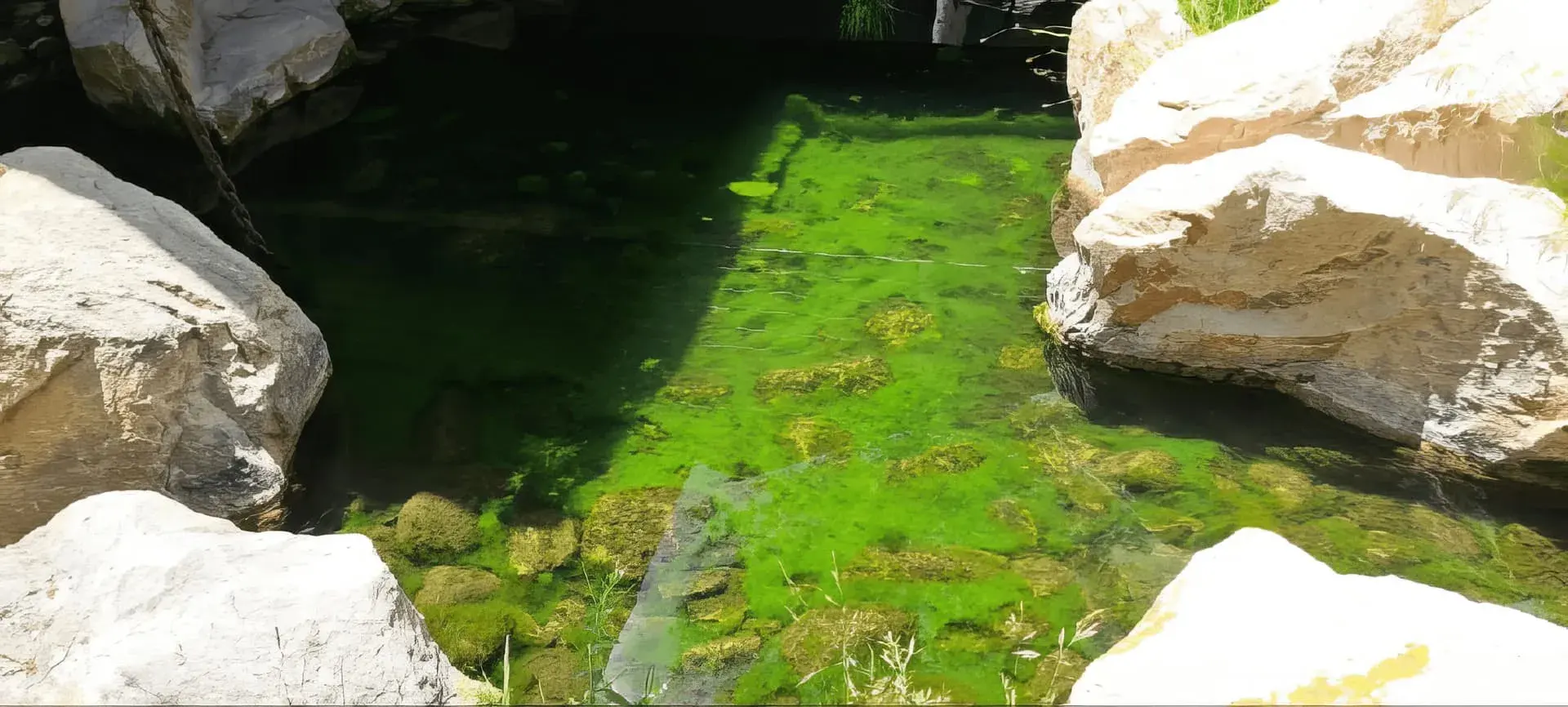
Strands grow on rocks, waterfalls, and pond edges. UV does not directly treat algae attached to those surfaces. Physical removal and addressing its nutrient supply are more useful starting points.
Cloudy water is not always algae. Sediment and other suspended material need a different assessment.
What We Ask Before Recommending a Fix
- Cleaning: When was the last cleanout? Has the pond ever been cleaned?
- Water source: Are you using culinary or secondary irrigation water? Source water may introduce algae and nutrients.
- Sunlight: Is the pond in direct sun all day?
- Plants: What living aquatic plants provide nutrient competition and shade?
- Equipment: What filter, pump, aeration, and UV equipment do you have, and is it working?
- Fish: What is the fish count, and has feeding or fish behavior changed?
Sludge and Debris Are Usually Part of the Story
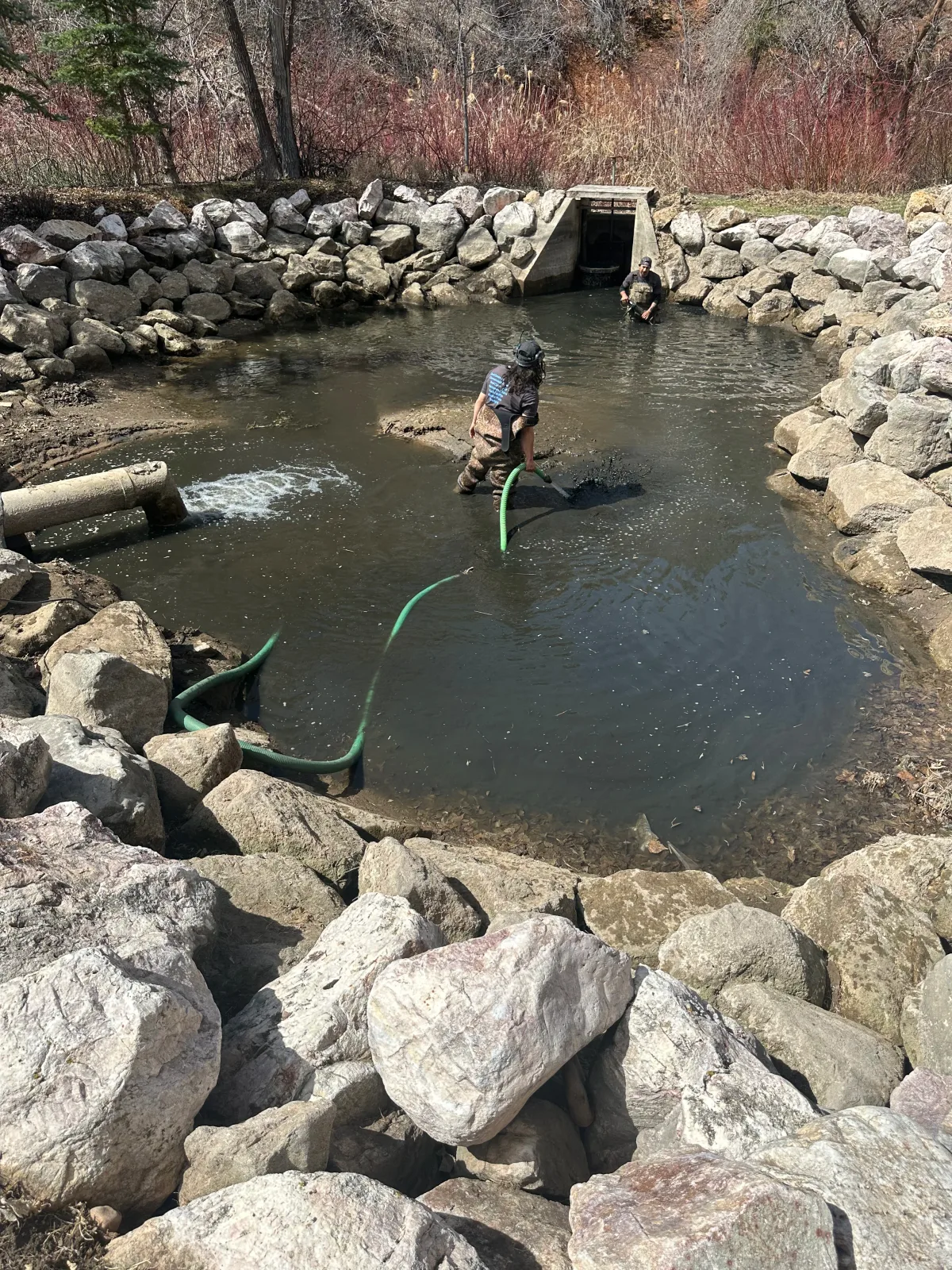
Leaves, fish waste, and dying vegetation build up between visits. We generally recommend spring and fall cleaning, with the scope matched to the pond. Not every algae bloom requires a full drain, but a neglected pond may need more than another treatment.
Our team cleans small backyard ponds through large pond projects. We document visits with photos and notes so we can compare conditions over time.
See what our pond cleaning service includes or compare vacuuming and dredging.
What Actually Helps: Plants, Filtration, and Circulation
Living aquatic plants take up nutrients and can provide shade. Choose plants for the pond's depth, space, sunlight, and mature size.
Mechanical filtration removes particles; biological filtration supports waste processing. Equipment should suit the pond volume, fish load, and circulation. Valuable fish make reliable filtration especially important, but ordinary backyard ponds need appropriate filtration too.
Learn about pond filtration systems and ongoing maintenance.
Where Beneficial Bacteria and Barley Fit
Beneficial bacteria are part of our maintenance approach. Products and pond conditions differ, so we recommend them as part of a broader plan, alongside cleaning, filtration, and appropriate aeration.
We carry barley straw and barley extract at our store. Barley straw may inhibit new algae growth; it is not an immediate way to kill an existing bloom. Results vary, and research on straw does not guarantee the performance of every extract. We can help you choose an appropriate option and understand its label.
Why Does Pond Algae Keep Coming Back?
Why quick-fix treatments often disappoint
Repeatedly treating visible algae without addressing what feeds it can leave you in the same cycle. Dead algae decomposes, can release nutrients, and increases oxygen demand. Removal and circulation matter, particularly when fish are present.
Algaecides can have a role when correctly selected and used according to their labels. More is not automatically better. Tell us what you have already applied before combining products or repeating a dose.
Real Ponds. Face-to-Face Advice. A Store You Can Walk Into.
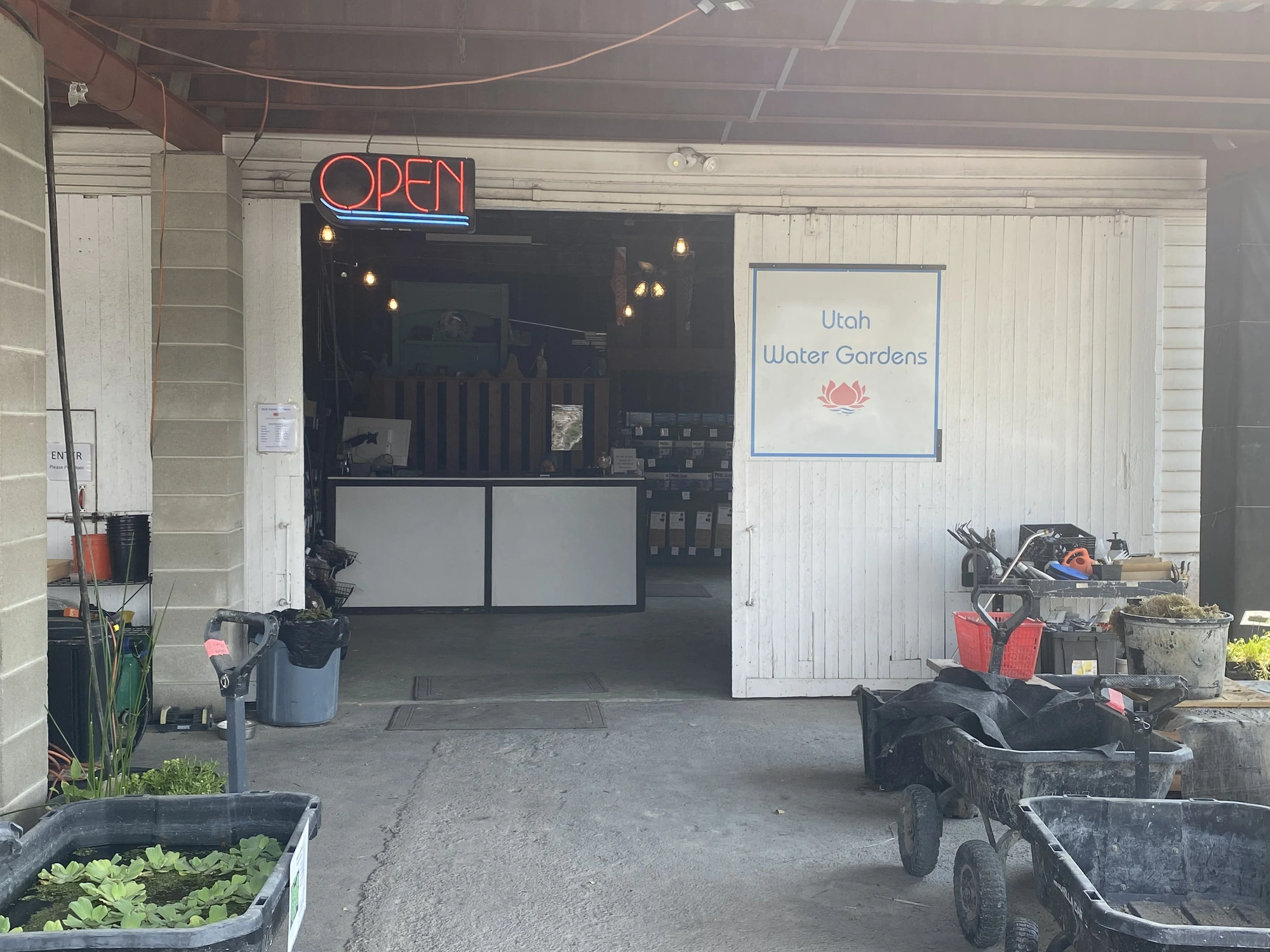
You do not have to figure it out from a product label or a phone call alone. Visit Utah Water Gardens, show us pictures, talk with our team face-to-face, and see our ponds in person. Our aquatic nursery and service team connect practical advice, supplies, and professional cleaning in one place.
Bring clear photos of the pond and algae, approximate dimensions, fish count, and details of your pump and filter. Let us know about any unusual insects or other changes you have noticed. A water sample is generally only useful when there is a specific reason to test.
Our local store carries living aquatic plants, beneficial bacteria, barley products, and pond equipment. We can connect service recommendations with suitable supplies. With advance notice, we may be able to bring recommended products to a scheduled visit.
5911 S 1300 E, Salt Lake City, UT 84121.
Is Your Pond Ready for a Cleanout?
If you cannot remember the last cleaning, there is heavy sludge or debris, or algae keeps coming back, let us assess the pond. Tell us your city, approximate dimensions, last cleaning date, and fish or equipment concerns.
Request a pond cleaning quote → Explore our cleaning process
When to Call for Help
Recurring algae, equipment failure, or fish distress deserve attention beyond another bottle of treatment. Contact us to discuss the appropriate next step. For care between visits, explore our summer pond care guide.
Common Pond Algae Questions
How do I keep algae out of my pond?
Focus on managing excessive growth: remove accumulated debris, maintain filters, avoid overfeeding fish, and choose suitable aquatic plants. A little algae is normal; recurring heavy growth is a reason to review the pond's maintenance and equipment.
How can I get rid of pond algae without harming fish?
Start by identifying the algae and assessing the pond before choosing a treatment. Remove accessible growth and debris, maintain aeration, and use only products labeled for your pond and fish at the specified rate. No treatment is automatically safe in every pond. For a cleanout, our team uses fish holding tanks and plans the work around the pond's needs. Read more about pond cleaning with fish care in mind.
Further Reading
Our practical advice draws on our service experience. For background on treatment limitations, see Penn State Extension's barley straw guidance and filamentous algae guidance.